Affiliate disclosure: As an Amazon Associate, PitPrimer earns from qualifying purchases at no additional cost to you. Product availability subject to change.
Grill shoppers compare upfront price constantly and fuel cost almost never, which is backwards if you cook more than a couple times a month. Here is what a typical 3-hour weekend cook actually costs in fuel across the three main types, using current retail pricing.
Charcoal: cheap per bag, but you burn through it
A 20-lb bag of briquettes runs roughly $12-$18 depending on brand and region, and a 3-hour indirect cook on a kettle or offset burns through 6-10 lbs depending on outdoor temperature and wind. That puts a typical cook at $4-$9 in fuel, with lump charcoal running slightly more per pound but often burning hotter and faster.
| Product | Standout Feature | Link |
|---|---|---|
| Kingsford Original Charcoal Briquettes, BBQ Charcoal for Grilling,… | READY TO GRILL QUICKLY: Kingsford Original Charcoal Briquettes light fast and are ready… | Check Price → |
| Henning Lee Used Digital Propane Tank Gauge with LCD Display – Accu… | KNOW YOUR FUEL LEVEL INSTANTLY Never run out of propane mid-grill again. This digital g… | Check Price → |
| Camp Chef Competition Blend BBQ Pellets, Hardwood Pellets for Grill… | Maple, Hickory, and Cherry Blend: Competition blend is the Jack of All Trades. It’s gre… | Check Price → |

- READY TO GRILL QUICKLY: Kingsford Original Charcoal Briquettes light fast and are ready to cook on in about 15 minutes, thanks…
- HOTTER BURN: Enjoy consistent fire—perfect for backyard barbecues, family gatherings, tailgates, camping and grilling parties
- AUTHENTIC WOOD SMOKE FLAVOR: Made with 100% natural ingredients and real American wood, Kingsford delivers authentic, smoky BBQ…
Propane: the cheapest fuel cost, if you track tank level
A 20-lb propane tank refill costs around $18-$24 and lasts 18-25 hours of grilling time at medium-high heat, depending on burner count and how often the lid stays open. That works out to roughly $1-$1.50 per hour of cook time — the lowest per-hour fuel cost of the three, assuming you’re not paying exchange-program markup every time.
The catch with propane isn’t the cost, it’s running out mid-cook with no warning. A cheap scale under the tank removes the guesswork entirely.
- KNOW YOUR FUEL LEVEL INSTANTLY Never run out of propane mid-grill again. This digital gauge displays your tank level in both pe…
- SMART TEMPERATURE COMPENSATION Built-in ambient temperature detection ensures accurate readings in all weather conditions—no gu…
- EASY INSTALLATION – NO TOOLS REQUIRED Quickly attach between your propane tank and regulator with a standard Type 1 connection….
Pellets: the most expensive fuel, and it’s not close
A 20-lb bag of hardwood pellets typically runs $18-$28, and a pellet grill burns 1-3 lbs per hour depending on set temperature and outside conditions — more at low-and-slow smoking temps than at high-heat searing. A 3-hour smoke session lands around $2-$6 in pellets, but a longer 8-hour brisket cook can burn a quarter of a bag on its own.
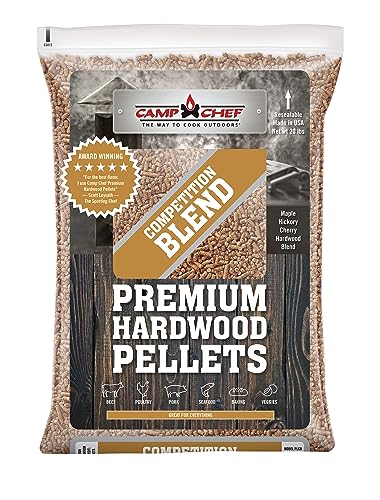
- Maple, Hickory, and Cherry Blend: Competition blend is the Jack of All Trades. It’s great with poultry, pork, baking, veggies,…
- No Oils, Chemicals, or Binders Added: No oils, chemicals or binders added mean better flavor and a more efficient burn.
- Kiln-Dried: The kiln dried process creates low moisture content for a very dry, hot burning pellet. This means it burns less to…
What this actually means for your grocery bill
If you cook weekly and mostly do quick weeknight dinners, propane wins on cost by a real margin. If you’re doing long low-and-slow smokes a few times a month, the pellet premium is small in absolute dollars even though it’s the highest per-pound fuel. Charcoal sits in the middle on cost but adds real flavor that the other two fuels can’t fully replicate on their own — that trade-off, not the price tag, is usually what should decide it.