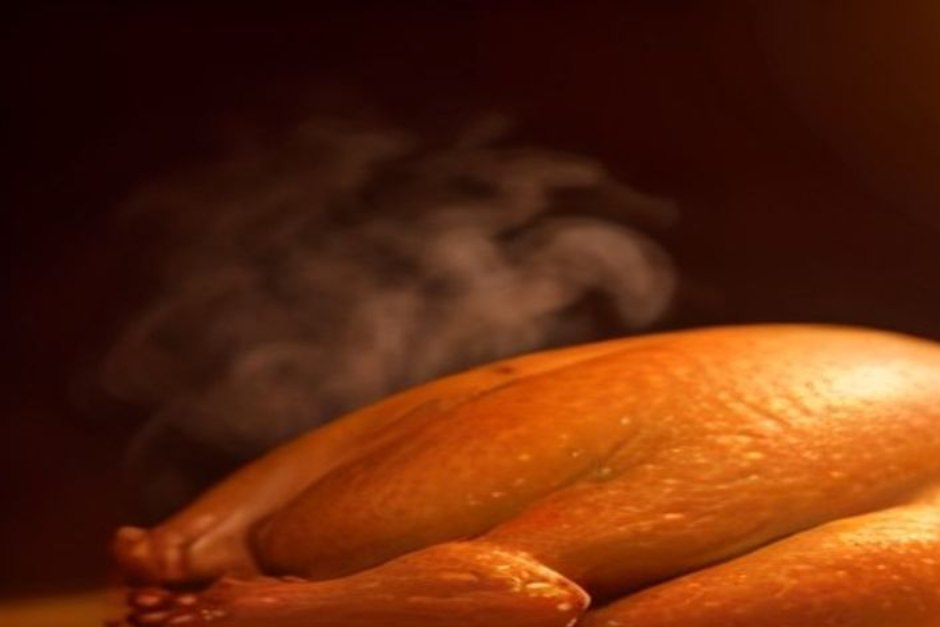
A pellet-smoked turkey is one of the best things a backyard cook can produce. Not the driest, not the most complicated — just genuinely one of the best. Crispy mahogany skin, deeply seasoned meat, and a subtle smoke flavor that no oven can match. This is a step-by-step guide to nailing it on Thanksgiving 2026, without inventing anything or overcomplicating what is already a simple technique.
Video: Stuffed Smoked Turkey by HowToBBQRight, via YouTube.
The Short Version
Dry brine a 12–15 lb turkey for 24–48 hours. Smoke at 275°F using apple or cherry pellets. Cook until breast reaches 160°F and thighs reach 175°F. Rest 20 minutes. Carve. Total active time: about 30 minutes. Total cook time: 4–5 hours.
Step 1: Pick the Right Turkey
Fresh is better than frozen if you can find it, but a frozen turkey done properly is 95% as good. What matters more:
- Size. A 12–15 lb turkey is the sweet spot for pellet smoking. Larger birds spend too long in the danger zone. If you need to feed more than 12 people, smoke two smaller turkeys rather than one 20-pounder.
- Not self-basting. Skip Butterball or any turkey labeled “enhanced” or “self-basting” — these are pre-injected with salt water that ruins a dry brine. Look for a plain natural turkey.
- Fresh vs frozen timing. If frozen, thaw in the fridge for 24 hours per 4 lbs. A 15 lb turkey needs 3.5 days in the fridge to thaw safely.
Step 2: Dry Brine (24–48 Hours Before)
The dry brine is what separates a good pellet-smoked turkey from a great one. It draws moisture out temporarily, then reabsorbs it with the salt dissolved into the meat — producing better seasoning depth and crispier skin than a wet brine.
Ratio: 1 tablespoon of kosher salt per 4 lbs of turkey. For a 12 lb bird, that’s 3 tablespoons kosher salt (Diamond Crystal — if using Morton, use 2 tablespoons since it’s denser).
Instructions:
- Remove giblets and pat turkey dry with paper towels.
- Mix salt with 2 tsp black pepper, 1 tsp garlic powder, 1 tsp onion powder, and 1 tsp smoked paprika.
- Sprinkle mixture over entire turkey — including inside the cavity and under the breast skin. Massage in gently.
- Place uncovered on a rimmed baking sheet in the fridge for 24–48 hours. The uncovered rest dries the skin, which is what makes it crispy.
Step 3: Fire Up the Pellet Grill
Aim for 275°F cooking temperature. Some people advocate low-and-slow at 225°F for turkey; that produces rubbery skin. 275°F gets the skin crispy while still keeping the meat juicy.
Pellet choice: Apple or cherry are the classic pairings for turkey — they add subtle sweetness without overwhelming. Avoid mesquite (too aggressive for poultry). A 50/50 blend of apple and hickory is also excellent.
Search apple wood pellets on Amazon →
| Product | Standout Feature | Link |
|---|---|---|
| Pit Boss 100% All Natural BBQ Hardwood Pellets for Cooking, Grillin… | A blend of apple and oak pellets to infuse food with a mild smoky flavor | Check Price → |
| ThermoMaven WiFi Wireless Meat Thermometer, 2 Probes, Smart Base, 6… | Smart Display Base: Unlike other thermometers that require an app to function, the P2’s… | Check Price → |

- A blend of apple and oak pellets to infuse food with a mild smoky flavor
- Pairs well with pork, lamb, poultry, and vegetables
- Crafted with all-natural 100% North American hardwood
Step 4: Prep the Bird Just Before Smoking
- Take turkey out of fridge 1 hour before smoking to take some of the chill off.
- Pat any surface moisture with paper towels.
- Rub 3 tbsp softened butter or duck fat all over the skin — helps browning.
- Optional: place a quartered onion, 2 sprigs of rosemary, and a halved lemon inside the cavity for aromatics.
- Truss the legs together with kitchen twine to keep the shape compact.
Step 5: Smoke to Temperature (Not Time)
Place the turkey directly on the grate, breast side up. Insert a wireless probe into the deepest part of the breast (not touching bone). Close the lid.
Cook until:
- Breast reaches 160°F internal (it will carry over to 165°F during rest)
- Thigh reaches 175°F internal (dark meat needs the higher temp for texture)
Typical timing at 275°F: about 15–18 minutes per pound. A 12 lb turkey will take roughly 3–3.5 hours; a 15 lb will take 4–4.5 hours. Do not go by clock — go by internal temp.
Search wireless thermometers on Amazon →

- Smart Display Base: Unlike other thermometers that require an app to function, the P2’s smart base provides direct target tempe…
- Unlimited Range via Wi-Fi: Unlike Bluetooth-only thermometer, the ThermoMaven P2 uses 2.4GHz Wi-Fi to connect the base to your…
- 100% Wireless Freedom: Kiss tangled wires goodbye with the ThermoMaven P2. Roam freely with Bluetooth long-range connectivity,…
Step 6: Rest, Then Carve
Pull turkey off the grill when temperatures hit target. Tent loosely with foil and rest 20–30 minutes on a cutting board. Do not skip this. Cutting into a turkey immediately after cooking dumps all the juices onto the board.
Carve in this order: legs and thighs first, then wings, then remove the whole breast lobes from the carcass and slice them across the grain. A carving board with a well is worth the small investment — it catches the juices you can pour back over the sliced meat.
Common Mistakes and How to Avoid Them
- Skipping the dry brine. The single biggest quality difference. Do it at least 24 hours ahead.
- Smoking too cold (225°F). Produces rubbery skin. Stick with 275°F for turkey.
- Cooking by time instead of temperature. Every turkey cooks differently. A wireless probe is $30 and eliminates the guessing.
- Basting during the cook. Opens the lid, drops the temperature, and does not help. Leave the lid closed. The skin will be crispier if you leave the bird alone.
- Skipping the rest. 20 minutes minimum. The bird retains its juices, and the temperature carries over exactly right.
What to Serve With It
Traditional pairings work: mashed potatoes, gravy, stuffing, roasted vegetables, cranberry sauce. If you want the sides to feel like they came from the same kitchen: consider a bourbon-cranberry sauce, brown butter sage roasted carrots, and a batch of buttermilk biscuits. The smoky turkey does the heavy lifting; the sides just have to show up.
The Bottom Line
A properly smoked pellet-grill turkey ruins oven turkey forever. Dry brine 24–48 hours ahead. Smoke at 275°F on apple pellets. Pull at 160°F breast / 175°F thigh. Rest 20 minutes. Carve. That’s the whole recipe.
Do this once and you will never go back to roasting a turkey in the oven.
Affiliate disclosure: As an Amazon Associate, PitPrimer earns from qualifying purchases at no additional cost to you.