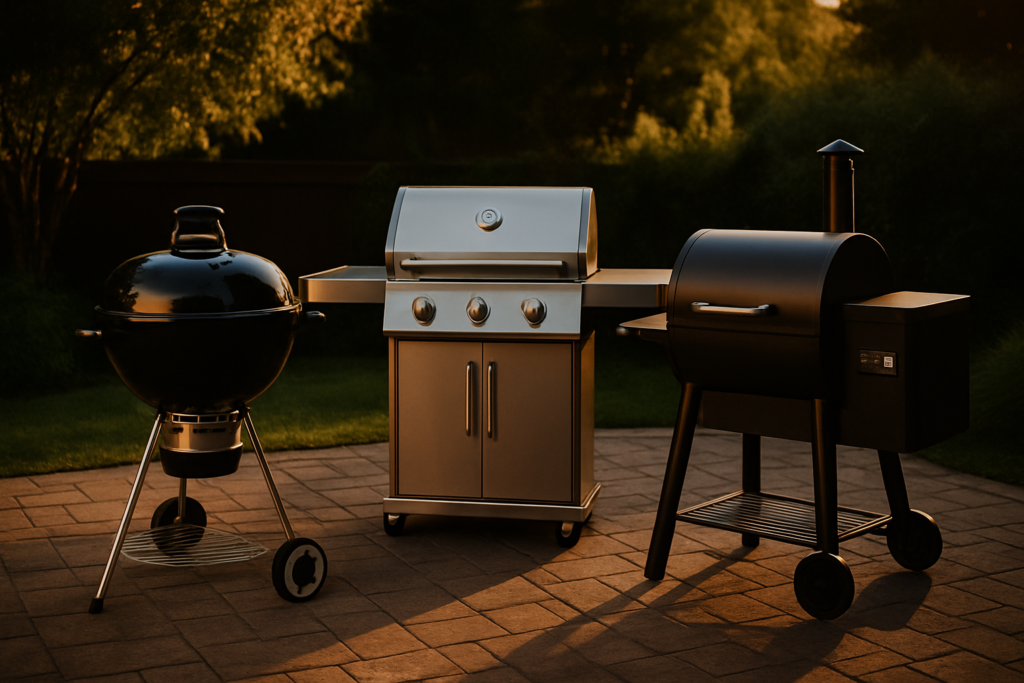
A $300 charcoal smoker will out-brisket a $1,200 pellet grill.
Real charcoal + wood smoke produces a smoke ring and bark that pellets cannot match. The trade-off is fire management. This guide ranks the charcoal smokers that actually deliver competition-quality results under $500 — bullet smokers, drum smokers, and offset entries — and covers what you are trading off at each price tier.
In this guide (jump ahead)
Disclosure: PitPrimer earns commission on qualifying purchases through Amazon Associates. Rankings reflect editorial synthesis of manufacturer specs, owner reviews, and category expertise.
The three charcoal smoker form factors
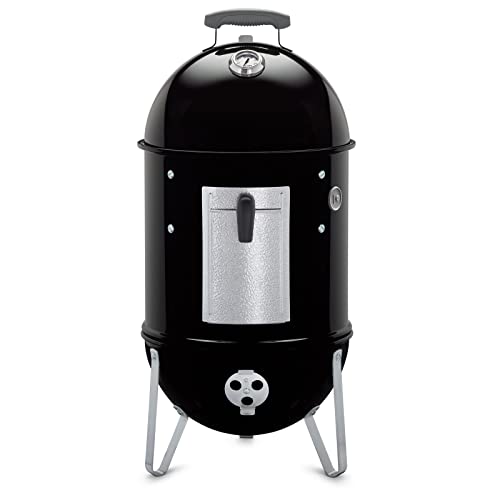
- Bullet (vertical water) smoker — Weber Smokey Mountain is the archetype. Charcoal at bottom, water pan in middle, meat racks above. Runs 8-12 hours on one load. Easiest to hold temperature. Sweet spot for brisket and pork butt.
- Drum smoker — Pit Barrel Cooker is the archetype. 55-gallon drum shape, meat hangs from rebar rods or sits on grates. Charcoal basket at bottom. Runs hot-and-fast (275-300F). Excellent for ribs and chicken; competent for brisket.
- Offset (horizontal) smoker — Oklahoma Joe Highland and Dyna-Glo Signature. Firebox on the side, cook chamber horizontal. Traditional Texas-BBQ shape. Requires most fire management skill. Steepest learning curve; ceiling matches any smoker at any price.
Fastest way to pick
- Best-value bullet smoker ~$300-400: Weber Smokey Mountain 18-inch or 22-inch. The mainstream champion for 15+ years. Nothing else in this class comes close on consistency.
- Best drum smoker ~$350-400: Pit Barrel Cooker Classic or Junior. Hang ribs vertically, cook chicken standing up. Simple to run, hard to mess up.
- Best budget offset ~$300-450: Oklahoma Joe Highland or Longhorn Reverse Flow. Needs modification (gasket kit, tuning plates) to hit its potential; ceiling is genuinely high.
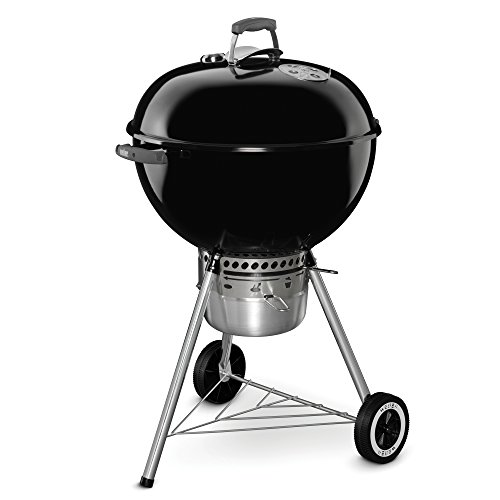
- Best kettle-as-smoker ~$150-250: Weber 22-inch Kettle Premium with Slow N Sear insert. Cheapest entry to real charcoal BBQ. Not a full-time smoker but incredibly capable for ribs and one-brisket cooks.
- Best entry-level bullet ~$180-240: Char-Griller Akorn Kamado Junior or Dyna-Glo Vertical Charcoal Smoker. Half the price of a WSM; two-thirds the results. Right for someone unsure if charcoal will stick.
What actually matters at this price tier
- Fuel efficiency — can it hold 225F for 10+ hours on a single charcoal load? Weber Smokey Mountain: yes, reliably. Pit Barrel: yes but hotter (275-300F). Cheap offsets: usually not without a fan mod or constant refueling.
- Gasket sealing — a poorly-sealed lid means air leaks that steal control. Budget offsets often need a gasket kit (~$25) before they run right. Bullet smokers usually seal fine from the factory.
- Grate area vs footprint — a 22-inch WSM cooks two 12-lb briskets simultaneously. A Pit Barrel hangs eight racks of ribs at once. An 18-inch Char-Griller does one brisket. Match to your cook volume.
- Temperature range — low-and-slow (225F) needs air control. Hot-and-fast (300F+) is easier. Bullets excel at 225-250F; drums prefer 275F+; offsets can run either but need attentive fire management.
- Assembly and quality control — entry-level offsets (Highland, Longhorn) ship with variable seam welding, warped legs, and wobbly lids. Ranking-wise still valid but expect an evening of tuning before first cook.
Best charcoal smokers by category
Best bullet: Weber Smokey Mountain 18-inch or 22-inch
The Weber Smokey Mountain (WSM) is the ranked-highest charcoal smoker under $500 for a reason. About $300 for the 18-inch, about $400 for the 22-inch. Water pan gives forgiving temperature control — a first-time smoker cook can hold 225F for 10 hours without touching the vents. Two porcelain-coated racks give enough space for two briskets, four pork butts, or a dozen racks of ribs. Weber’s build quality has been consistent for 15+ years.
Where it ranks lower: no hot-and-fast option (max ~325F). No built-in thermometer worth trusting; add a wireless probe. And once you fill it with meat, you have committed — no easy access to add food mid-cook.
- Weber Smokey Mountain 18-inch
- Material Type: Steel
- The Weber Smokey Mountain charcoal smoker helps you achieve an authentic smokehouse flavor at home
- It can accommodate a whole turkey and an entire ham at the same time. Item weight- 39.1 pounds
- Weber Smokey Mountain 22-inch
- Weber Smokey Mountain 14-inch (compact)
- Porcelain-enameled lid, bowl, and center section retain heat and won’t rust or peel
- Two cooking grates provide ample room for smoking two large items at once
- Silicone temperature grommet monitors the internal temperature of your smoker

Best drum: Pit Barrel Cooker Classic or Junior
The Pit Barrel Cooker is the “easy mode” of charcoal smoking. Hang ribs from rebar rods, drop chicken standing up onto a grate, set the vents once and walk away. Cooks at 275-300F, which is where ribs and chicken excel. Brisket is competent but not brisket-optimal. $350-400.
What sold the format: consistency. The vertical hanging design drips fat back onto the coals, self-basting the meat. Novices produce competition-quality ribs on their first cook. Where it ranks lower: no water-pan flexibility, no low-and-slow mode, and the 30-inch height eats floor space.
- Pit Barrel Cooker Classic
- EFFORTLESS COOKING: Whether you’re new to outdoor cooking or an expert trying to perfect your craft, cook consistently every ti…
- VERSATILE COOKING OPTIONS: The cooking possibilities are endless. Grill or hang ribs and brisket using the hooks and steel gril…
- DURABLE CONSTRUCTION: Each Pit Barrel Cooker is made with a superior-grade porcelain enamel finish that looks great and is desi…
- Pit Barrel Cooker Junior
- EFFORTLESS COOKING: Whether you’re new to outdoor cooking or an expert trying to perfect your craft, cook consistently every ti…
- VERSATILE COOKING OPTIONS: The cooking possibilities are endless. Grill or hang ribs and brisket using the hooks and steel gril…
- DURABLE CONSTRUCTION: Each Pit Barrel Cooker is made with a superior-grade porcelain enamel finish that looks great and is desi…
- Oklahoma Joe Bronco (drum alt)
- AWARD-WINNING AUTHENTIC BBQ PERFORMANCE: Recognized as the 2025 Men’s Journal Grilling Awards Best Overall Smoker for deliverin…
- TRUE SMOKER-TO-GRILL VERSATILITY: Quickly switch between low-and-slow smoking and high-heat grilling, with included rib hanging…
- NO-INTERRUPTION FUEL ACCESS: Industry-leading fuel door on this Oklahoma Joe’s smoker lets you add charcoal or wood without rem…


Best budget offset: Oklahoma Joe Highland or Longhorn Reverse Flow
The Oklahoma Joe Highland is $350-450 depending on retailer, and the Longhorn Reverse Flow is $450-500. Both are entry-level offsets. Right out of the box they leak air, and the paint scorches inside the firebox on the first cook. Add a gasket kit for about $25, a set of tuning plates for about $40 for even heat, and a basket for about $30 for cleaner fires, and you have a real offset that can compete with $1,500 pits on taste.
The trade-off is the learning curve. Offset fire management takes 4-6 cooks to internalize. The wrong wood placement, an unsealed firebox, or a wet log will ruin an 8-hour brisket. Once dialed in, this is the best BBQ you can buy for $500.
- Oklahoma Joe Highland
- OFFSET SMOKER: With a horizontal cooking chamber and a firebox on the side, this smoker is fueled by charcoal and flavored by h…
- COOKING AREA: Smoke up to 5 briskets, 10 whole chickens or 7 pork shoulders on the 619-square-inch primary and 328-square-inch…
- ASH PAN: A removable ash pan on the side of the firebox collects ash from the fire and provides easy access to clear out the as…
- Oklahoma Joe Longhorn Reverse Flow
- AUTHENTIC BBQ, SWITCHABLE REVERSE FLOW PERFORMANCE: Cook low-and-slow with indirect heat using charcoal and hardwood splits or…
- LARGE-SCALE COOKING CAPACITY: Charcoal grill with smoker 751 sq in primary and 309 sq in secondary cooking space let you smoke…
- EVEN HEAT, CONSISTENT RESULTS: Four baffles locked beneath the grates distribute heat and smoke evenly across the cooking chamb…
- Dyna-Glo Signature Offset


Best kettle-as-smoker: Weber 22-inch Kettle Premium + Slow N Sear
The most versatile $200 cook you can own. The Weber 22-inch Kettle Premium is a $180-200 charcoal grill. Add a Slow N Sear water-and-charcoal basket insert for about $130 and you have a serious low-and-slow smoker AND a high-heat searing grill. Total: $310-330.
Where it excels: ribs, chicken, one brisket at a time, and every high-heat sear. Where it ranks lower than a WSM: fuel efficiency (needs a refuel around hour 8), grate area (one brisket max), and holding low temperatures under 250F is harder without a fan.
- Weber 22-inch Kettle Premium
- This premium Weber kettle grill has space to hold up to 13 burgers made with a Weber burger press; The durable-plated steel coo…
- Easy Ash Cleanup: The One-Touch cleaning system included in the black charcoal grill has a removable aluminized, high-capacity…
- Durability and Flavor Retention: Porcelain-enameled lid and bowl are engineered to withstand high temperatures and retain heat;…
- Slow N Sear Insert
- Original Patented Two-Zone Cooking – From 225°F to 1000°F – The Slow ‘N Sear is a patented charcoal basket insert for 22″ kettl…
- Removable Water Reservoir – The Deluxe model’s built-in reservoir holds just over one quart of water, generating 5+ hours of st…
- 8+ Hours of Uninterupted Grilling With One Load of Charcoal – Load one chimney-full (~80–100 briquettes) and the Slow ‘N Sear’s…
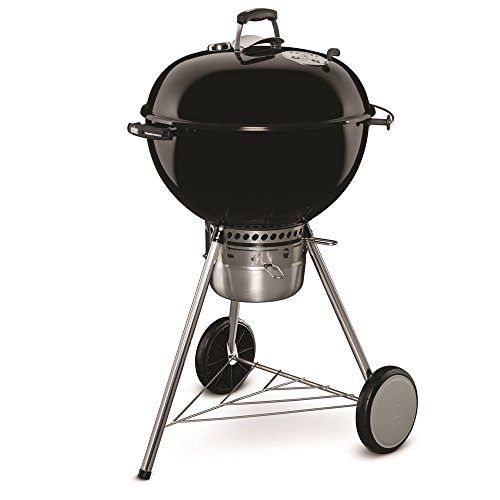
- Weber Master-Touch 22-inch
- Simple Lid Storage: Slide the lid of your Weber Master-Touch charcoal grill into the Tuck-Away lid holder on the side of the gr…
- This stylish black grill has space to hold up to 13 burgers made with a Weber burger press; Cooking grate is compatible with Go…
- Easy Ash Cleanup: One-Touch cleaning system included in the black charcoal grill provides efficient and easy cleanup of charcoa…

Best entry-level bullet: Char-Griller Akorn Junior or Dyna-Glo Vertical
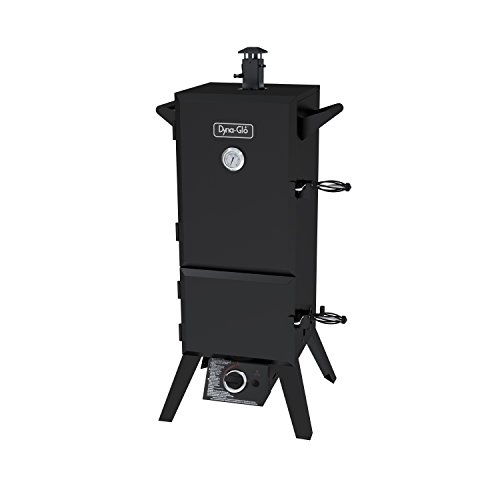
For $180-240, you get a bullet smoker without the WSM premium. Char-Griller Akorn Junior is a kamado-style ceramic-lined bullet at around $220. Dyna-Glo Vertical Charcoal is a metal bullet at around $180. Both work for the price. Both have thinner steel than a WSM, so temperature swings are more pronounced. Both are entirely reasonable first-charcoal-smoker choices.
Where they rank lower: less consistent temperature control, thinner build, shorter service life (5-8 seasons vs 15+ for a WSM). Right pick if you are unsure whether charcoal smoking will stick for you.
- Char-Griller Akorn Junior
- Dyna-Glo Vertical Charcoal
- A total of 784-square inch of cooking space for smoked flavored foods. 4 adjustable steel wire racks
- A 15,000 btu cast iron burner with an electronic push button ignition, and a large control dial
- Porcelain enameled steel wood chip box with handles and lid for choice of wood chips and porcelain enameled steel water bowl
- Cuisinart 16-inch Vertical (budget)
- SPACIOUS COOKING AREA: Two 16-inch chrome-plated steel grates provide 402 square inches of cooking space for smoking meats, fis…
- MOISTURE-LOCKING: A porcelain-enameled water bowl keeps food tender and juicy while infusing deep smoky flavors.
- TEMPERATURE CONTROL: Dual top and bottom air vents allow for effortless heat regulation.
Common mistakes to avoid
- Buying an offset before you have cooked on a bullet. Fire management on an offset is a real skill. Start with a WSM, learn temperature control, then step up to an offset if you want the challenge.
- Skipping the mods on a budget offset. A gasket kit for about $25 plus tuning plates for about $40 make the difference between a smoker that runs and one that fights you.
- Assuming charcoal = harder. A WSM with a wireless thermometer is easier than a pellet grill without an app. Modern accessories close the gap.
- Buying briquettes only. Lump charcoal burns cleaner and hotter. Briquettes are fine for long low-and-slow, but for ribs and chicken, lump wins on flavor.
- Storing the smoker uncovered. Water in the cook chamber rusts every charcoal smoker below $1,000. Cover it or garage it.
Frequently asked questions
Do I need a water pan?
WSM includes one. Pit Barrel does not use one (drip pan instead). Offsets vary. Water pans stabilize temperature and add humidity; they do not add flavor. Optional but helpful for first-year cooks.
How much charcoal do I burn on a brisket cook?
A 22-inch WSM uses about 12-15 lbs of briquettes for a 12-hour brisket. Pit Barrel uses similar. Offsets use significantly more (25-40 lbs) because of the firebox-to-chamber airflow requirement.
Can a charcoal smoker do pizza?
A Weber Kettle with a pizza stone can. A WSM cannot — max temp too low. A Pit Barrel with the grate at 300F can, if you use a stone. Offsets generally cannot.
What is a “smoke ring” and can pellet grills produce one?
The pink ring 1/4-inch below the bark on a properly-smoked brisket. Formed by nitric-oxide reactions in the meat. Charcoal + wood produce a real one every cook. Pellet grills produce one occasionally but less reliably.
Is a kamado worth the extra money over a WSM?
A Kamado Joe Classic III at around $700 cooks like a WSM does for many roles at 2x the price. It adds high-heat searing (up to 750F) and better fuel efficiency. For pure smoking, WSM is enough. For versatility across searing AND smoking AND pizza, kamado wins.
Bottom line
Under $500, the highest-ranking charcoal smoker choice depends on cook style. Set-and-forget low-and-slow = Weber Smokey Mountain 22-inch. Rib-and-chicken specialist with easy mode = Pit Barrel Cooker Classic. Pit-master aspirations with willingness to tune = Oklahoma Joe Highland with mods. Ultimate versatility = Weber Kettle + Slow N Sear. First-charcoal-purchase and unsure = Char-Griller Akorn Junior. Match the smoker to how you actually cook, and none of these disappoint.
See also: Traeger vs Recteq 2026: The Enthusiast Pellet Grill Head-to-Head (Which Ranks Higher?)
More BBQ and grilling picks: PitPrimer covers pellet smokers, gas grills, griddles, and accessories with a focus on ranked comparisons rather than one-brand cheerleading. Bookmark the home page for the latest guides.
Related PitPrimer guides
- Weber Smokey Mountain vs Pit Barrel Cooker vs Oklahoma Joe Bronco Drum 2026 Comparison
- Best Portable Charcoal Grill for Tailgating 2026: Weber Smokey Joe, Char-Griller, and Cuisinart Ranked
- Best Pellet Smoker 2026: Traeger, Weber, Pit Boss, Camp Chef, and Yoder Head-to-Head
- Best Offset Smoker 2026: Oklahoma Joe, Old Country, and Franklin Reverse Flow Ranked
Frequently asked questions
How were these products selected?
This guide is a research-based synthesis of product specs, brand reputation, current Amazon reviews, and category trends. It is not a hands-on review – use it to narrow options before you buy.
What price range should I expect?
Prices vary significantly across the categories above. Entry options start at the lower end of each tier listed, while premium picks can be several times more. Amazon pricing changes frequently, so confirm current numbers on the product listings.
Should I always buy the most expensive option?
Not necessarily. Premium products offer better materials, longer warranties, and higher-end features, but mid-tier picks meet the needs of most buyers. Match the pick to your actual use case rather than defaulting to the top of the price range.
How often is this guide updated?
This guide is refreshed as new products launch and older picks are discontinued. Amazon pricing and stock change daily – always confirm current price and availability on Amazon before purchase.
Where is the best place to buy?
Amazon is linked throughout this guide because it typically has broad selection, current pricing, and standardized return policies. Direct manufacturer sites and specialty retailers are also options depending on category and preference.
Related BBQ guides
Shop the Amazon Storefront
Every pellet smoker, grill, and BBQ accessory recommendation – curated in one Amazon Storefront.
Try Amazon Prime free for 30 days – fast pellet and BBQ ingredient delivery
As an Amazon Associate and Amazon Influencer, we earn from qualifying purchases at no extra cost to you.