Cheap BBQ gloves are how good cooks end up in the ER on July 4th.
The $8 pair sold at every gas station rates for 100 seconds at 500F. Your Weber Kettle grate is 600F+. This guide covers the gloves that actually work for smash burgers, brisket handling, pizza-oven launching, and grate swapping — ranked by heat rating, dexterity, and food-safe status. Picks for $15 up to $50.
In this guide (jump ahead)
Disclosure: PitPrimer earns commission on qualifying purchases through Amazon Associates. Rankings reflect editorial synthesis of manufacturer specs, owner reviews, and category expertise.
The three glove categories every BBQ cook needs
- High-heat insulated grill gloves — grate lifting, coal shoveling, hot iron handling. Aramid fibers, kevlar, or leather-lined. Not for direct food contact.
- Food-safe nitrile / silicone gloves — brisket wrapping, rub application, pulled-pork shredding. Latex-alternative for allergy safety. Disposable or reusable.
- Heat-resistant silicone or leather grill mitts — pot handling, hot pan transfer, oven-to-grill work. The middle-ground pick between grate gloves and food-safe.
Fastest way to pick
- Best all-round high-heat pair ~$25-35: RAPICCA Leather Gloves 932F or Grill Armor Extreme Heat 932F. Full forearm coverage, actual sustained protection at grill temps.
- Best food-safe reusable ~$15-25: Bear Paws (long silicone) or Char-Griller BBQ gloves. Wash and reuse, dishwasher safe.
- Best disposable nitrile bulk pack ~$18-30: Gloveworks HD Black Nitrile 100-pack or Adenna Dark Blue Nitrile. Puncture-resistant, no latex.
- Best premium leather ~$45-60: Gsou Snowproof BBQ Leather Gloves or SteelShield Cowhide Grill Gloves. Full grain leather, aramid liner.
- Best budget starter pair ~$12-18: RAPICCA Silicone Grill Gloves or Blackstone Griddle Gloves. Not as heat-rated but fine for $300 gas grill occasional use.
The specs that actually matter
- Heat rating (in Fahrenheit) — the number to check. Most gas grill grates: 400-500F. Kettle grill grates during a cook: 600-700F. Pizza oven interiors: 900F+. Buy for the worst case you actually hit, not the average.
- Duration of contact — a glove rated to “932F for 10 seconds” is different from “932F sustained.” Grate handling is 3-10 second bursts; pizza oven work can be 30+ seconds. Read the fine print.
- Length — wrist-length is not enough for a Kettle or offset smoker. You want at least 14 inches of forearm coverage. Snow-glove-style long-cuff designs prevent inside-forearm burns from grate edges.
- Grip — wet or greasy food (raw brisket, pork shoulder) needs textured silicone or rough leather. Smooth surfaces slip.
- Dexterity vs protection trade-off — the more heat protection, the less finger dexterity. Cannot reasonably pull a probe out or handle small tongs while wearing thick aramid mitts. Match the glove to the task.
- Food-safe certification — nitrile and food-grade silicone are safe for direct food contact. Aramid/kevlar/treated leather are NOT. Do not touch raw brisket with a grate glove.
Best BBQ gloves by category
Best all-round high-heat: RAPICCA and Grill Armor Extreme Heat
Both brands sell heat-resistant gloves rated to 932F for short-duration contact. Long-cuff forearm coverage, aramid fiber knit exterior with cotton lining. RAPICCA is slightly more available and cheaper; Grill Armor has more consistent sizing feedback in reviews. Either handles grate lifting, hot cast iron pan transfer, and coal chimney work without the “hot spot” complaints cheaper gloves attract.
Use case: any hot-side grill task where dexterity is not required. Not for probe insertion or fine food handling. Wash by hand; do not machine wash aramid gloves.
- RAPICCA 932F Aramid Grill Gloves
- Excellent Oil & Heat Resistance: Crafted from Food-Grade neoprene rubber, these gloves boast outstanding resistance to water, o…
- Comfortable Firm Grip: Designed for pit masters, this glove features a double-layer insulated liner and a textured palm, ensuri…
- Smooth Hot Liquid & STEAM Management: Experience effortless food extraction from hot boiling water or steam with these gloves,…
- Grill Armor Extreme Heat 932F
- Extreme Heat Protection Up to 932F: Cook, grill, or bake with confidence – these EN407-certified heat proof gloves shield your…
- Built Tough with Aramid Technology: Our heat resistant gloves are with premium M-ARAMID & P-ARAMID fabrics the same fibers used…
- Soft Cotton Comfort Inside: These grilling gloves are lined with 100% cotton to keep hands cool, dry, and comfortable during lo…
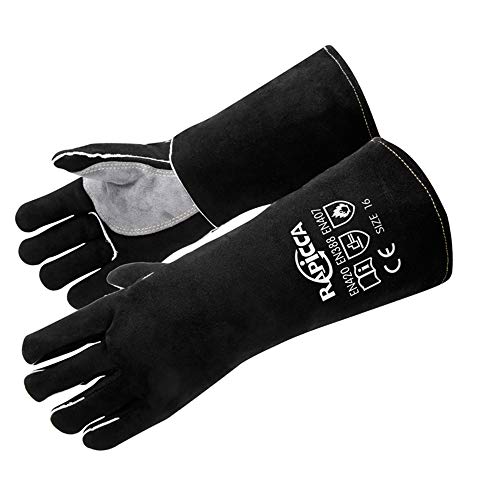
- RAPICCA 16-inch Long Leather Alt
- GREAT FIRE & HEAT RESISTANCE: Made from premium fireproof leather exterior, insulating aluminum foil middle layer, a soft, flam…
- SUPERIOR SECURITY FOR FOREARMS: Our 16-inch extra-long gloves with 7.5-inch sleeves provide superior forearm protection, effect…
- ULTIMATE COMFORT: Soft insulated cotton lining ensures superior heat resistance, cold resistance, sweat absorption, and breatha…
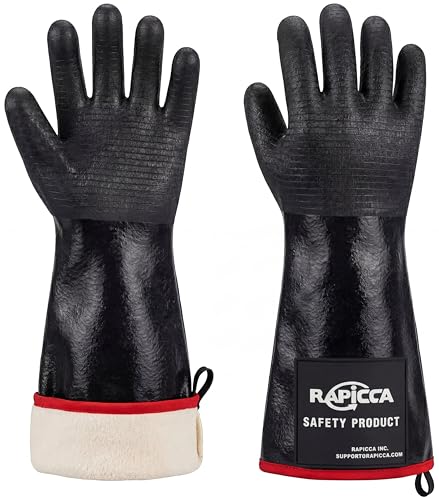

Best food-safe reusable: Bear Paws long silicone and Char-Griller
For brisket wrapping, pulled pork shredding, or lifting a hot cast iron dutch oven from the grill onto a serving trivet, food-safe silicone is the right tool. Bear Paws sells a long-cuff silicone glove rated to 425F that is dishwasher safe. Char-Griller offers a similar design at a lower price. Both are direct food-contact safe.
Where they rank lower: sustained high heat above 450F destroys them. Not for grate work.
- Bear Paws Long Silicone
- ð¾ WILD FIRE HEAT PROTECTION – Bear paw oven mitts built for real oven and grill heat. Capable of withstanding temperatures u…
- ð¾ GRIZZLY GRIP STRENGTH – Say goodbye to slips and drops. The Beast Glove Oven Mitts feature strategically placed textured s…
- ð¾ TRIPLE-LAYERED BEAR COAT – Experience the ultimate in heat protection with these bear oven mitts advanced three-layer cons…
- Char-Griller Silicone BBQ Gloves
- 【Heat temperature resistance】Our BBQ gloves are designed to provide protection for your hands while cooking, grilling, baking,…
- 【Safe and long working life】 Wrist knitting lengthened, effective to prevent hot, anti-slip ,more safe; dense anti-slip heat-pr…
- 【MATERIAL】 Aramid + environmentally friendly silica gel + inner layer cotton
- Grill Beast Silicone Gloves


Best disposable nitrile: Gloveworks HD and Adenna
The competition-BBQ standard. Nitrile in 6-mil or 8-mil thickness, black or dark blue color (hides pit residue). Puncture-resistant, latex-free, food-safe. 100-count bulk boxes at $18-30. Use one pair per session or per phase of a cook (rub application, wrapping, unwrapping, plating).
Warning: cheap 3-mil nitrile tears the moment you touch a rib bone. Always buy 6-mil or thicker for BBQ work.
- Gloveworks HD Black 6-mil (100pk)
- HEAVY DUTY NITRILE GLOVES: Medium through XXL sizes available. Featuring the comfortable fit and feel of latex gloves, they pro…
- BLACK GLOVES FOR COOKING: Disposable, latex free black nitrile gloves easily conceal dirt, grease, and grime maintaining their…
- GLOVEWORKS NITRILE GLOVES: The ultimate performance in disposable gloves. They feature a raised diamond texture which effective…
- Adenna Dark Blue 8-mil
- Product 1: Powder-Free Nitrile & Textured Grip
- Product 1: 9 mil finger thickness, durable for high risk and mid to heavy duty applications
- Product 1: 100% rubber latex free eliminates potential allergic reactions to latex protein
- Venom Steel 6-mil Rip Resistant
- Venom Steel nitrile gloves provide 2 layers of protection for incredible rip, tear, puncture, and chemical resistance
- Heavy duty disposable gloves have 2 premium nitrile layers; black outer layer with break through indicating white inner layer
- 6 mil thickness is 70 percent thicker than common disposable gloves, powder free and not made with natural rubber latex


Best premium leather: Gsou and SteelShield full-grain cowhide
For serious grill cooks who want a glove that will last five seasons of daily use. Full-grain cowhide exterior, aramid inner liner, reinforced palm. $45-60. Not the most flexible, but the most durable option in this category. Wash and condition once per season.
- Gsou Cowhide BBQ Leather
- GREAT FIRE & HEAT RESISTANCE: Made from premium fireproof leather exterior, insulating aluminum foil middle layer, a soft, flam…
- SUPERIOR SECURITY FOR FOREARMS: Our 14-inch extra-long gloves, equipped with 5.5-inch sleeves, provide exceptional protection f…
- Ultimate Comfort: Soft insulated cotton lining ensures superior heat resistance, cold resistance, sweat absorption, and breatha…
- SteelShield Cowhide Aramid-Lined
- EXTREME HEAT RESISTANT PROTECTION: Reinforced Kevlar & Double leather stitching and high strength sewing on both fingers, palms…
- EXTREME WEAR RESISTANCE: The heat resistant gloves are made from 1.2mm thick and 100% natural cowhide leather and leather reinf…
- SUPERIOR END-TO-END COMFORT & PROTECTION: Unlike ordinary gloves, ours feature a 100% soft cotton-lined interior for superior h…
- Homquen 14-inch Leather
- Great Fire & Heat Resistance: Made from premium heat-resistant split cowhide leather with a soft cotton lining and reinforced p…
- Full Forearm Protection with 14-Inch Length: Our fireplace gloves are engineered to shield your forearm from the hazards of the…
- Built for Durability & Everyday Comfort: Crafted for long-lasting use, they feature double leather stitching at high-wear areas…


Best budget starter: RAPICCA silicone or Blackstone griddle gloves
For someone new to grilling with a modest gas grill and no ambition to do brisket cooks, a $12-18 silicone glove pair is enough. RAPICCA sells a silicone version (not to be confused with their aramid heat-rated line) at around $15. Blackstone sells griddle-branded gloves at similar price. Rated to 500F short-duration, food-safe.
Skip these if you cook with charcoal or handle hot iron. They will melt.
- RAPICCA Silicone (budget)
- Blackstone Griddle Gloves
- Heat Resistant Gloves: Blackstone provides an excellent heat aid while facing an extremely hot grill on a barbecue day. The Bla…
- Outdoor and Indoor Use: Our grill gloves for cooking are versatile. Be it indoors or out, our griddle gloves will keep your han…
- Quality Material for Convenient Use: Our heat gloves for grill are made with a blend of Aramid and Cotton and have silicone lin…
- Grill Beast Waterproof (budget)

Common mistakes to avoid
- Buying wrist-length gloves for a Kettle. Reaching over hot coals scorches your inside forearm. Get 14+ inch cuff length.
- Using aramid/kevlar gloves for food contact. Not food-safe. Keep a separate pair of nitrile or food-grade silicone for direct food handling.
- Machine-washing aramid gloves. Detergent destroys the fiber. Wipe clean and air dry only.
- Trusting the “932F” rating without checking duration. Many gloves rate for 10-15 second contact only. Sustained pizza oven work above 900F destroys most consumer BBQ gloves within one season.
- Buying 3-mil nitrile for brisket cooks. Tears on the first bone. Always 6-mil or thicker for BBQ.
Frequently asked questions
Can I put grill gloves in the dishwasher?
Silicone yes (Bear Paws, Char-Griller, Blackstone). Aramid/kevlar/leather no. Nitrile disposables are single-use.
What is the difference between kevlar and aramid?
Kevlar is DuPont’s brand name for aramid fiber. All kevlar is aramid; not all aramid is kevlar. Ranking-wise, look at heat rating and construction, not the brand of fiber.
Are welding gloves the same as BBQ gloves?
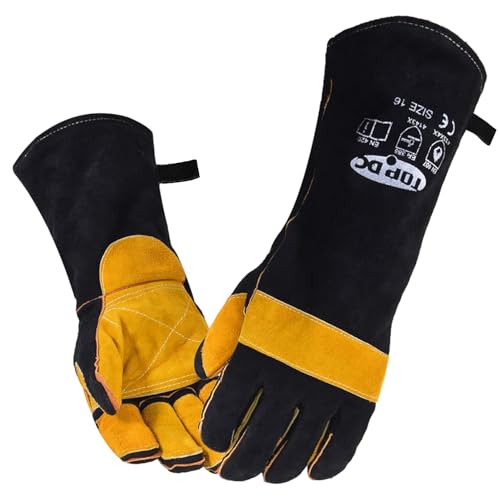
Long welding gloves (16-inch cowhide) are often re-branded as BBQ gloves and vice versa. They work fine for grill grate handling. Not food-safe.
How often should I replace nitrile gloves during a cook?
Once per phase minimum: rub application, wrapping, unwrapping, plating. If a glove tears, replace immediately. A 100-pack lasts most home cooks 4-6 months.
Do I really need three different types?
For a Weber Kettle or offset smoker owner, yes. High-heat aramid pair for the fire, nitrile disposables for food contact, silicone or leather for the middle-ground tasks (moving pans, handling hot lids). For a gas-grill-only cook, one silicone pair plus a box of nitrile is usually enough.
Bottom line
The right BBQ glove depends on the task. High-heat aramid (RAPICCA or Grill Armor 932F) for grate work. Long silicone (Bear Paws) for hot-and-wet food handling. Bulk 6-mil nitrile for direct raw food contact. Premium leather (Gsou or SteelShield) if the pair will see daily use for five seasons. Buy the right glove for the right task and the price-per-use ratio drops fast.
See also: Best Father’s Day Grills and BBQ Gifts 2026: The Complete Gift Guide (Any Budget)
More BBQ and grilling picks: PitPrimer covers pellet smokers, gas grills, griddles, and accessories with a focus on ranked comparisons rather than one-brand cheerleading. Bookmark the home page for the latest guides.
Related PitPrimer guides
- Best BBQ Holiday Gift Guide 2026: Gifts for Grillers at Every Budget
- Best BBQ Setup Under $500 Complete Guide 2026: Grill + Thermometer + Tools + Fuel + First-Cook
- Best BBQ Rub 2026: Brisket, Ribs, Chicken, and Pork Picks by Category
- Best BBQ Cover 2026: Pellet Grill, Gas Grill, and Griddle Covers Ranked by Weather Protection
Frequently asked questions
How were these products selected?
This guide is a research-based synthesis of product specs, brand reputation, current Amazon reviews, and category trends. It is not a hands-on review – use it to narrow options before you buy.
What price range should I expect?
Prices vary significantly across the categories above. Entry options start at the lower end of each tier listed, while premium picks can be several times more. Amazon pricing changes frequently, so confirm current numbers on the product listings.
Should I always buy the most expensive option?
Not necessarily. Premium products offer better materials, longer warranties, and higher-end features, but mid-tier picks meet the needs of most buyers. Match the pick to your actual use case rather than defaulting to the top of the price range.
How often is this guide updated?
This guide is refreshed as new products launch and older picks are discontinued. Amazon pricing and stock change daily – always confirm current price and availability on Amazon before purchase.
Where is the best place to buy?
Amazon is linked throughout this guide because it typically has broad selection, current pricing, and standardized return policies. Direct manufacturer sites and specialty retailers are also options depending on category and preference.
Shop the Amazon Storefront
Every pellet smoker, grill, and BBQ accessory recommendation – curated in one Amazon Storefront.
Try Amazon Prime free for 30 days – fast pellet and BBQ ingredient delivery
As an Amazon Associate and Amazon Influencer, we earn from qualifying purchases at no extra cost to you.