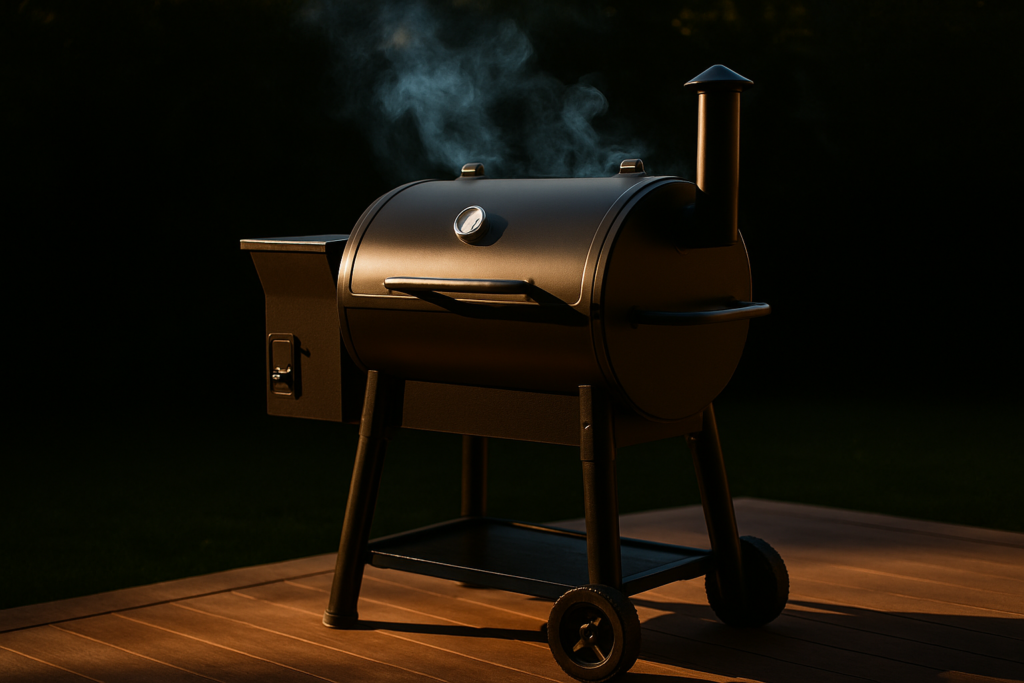
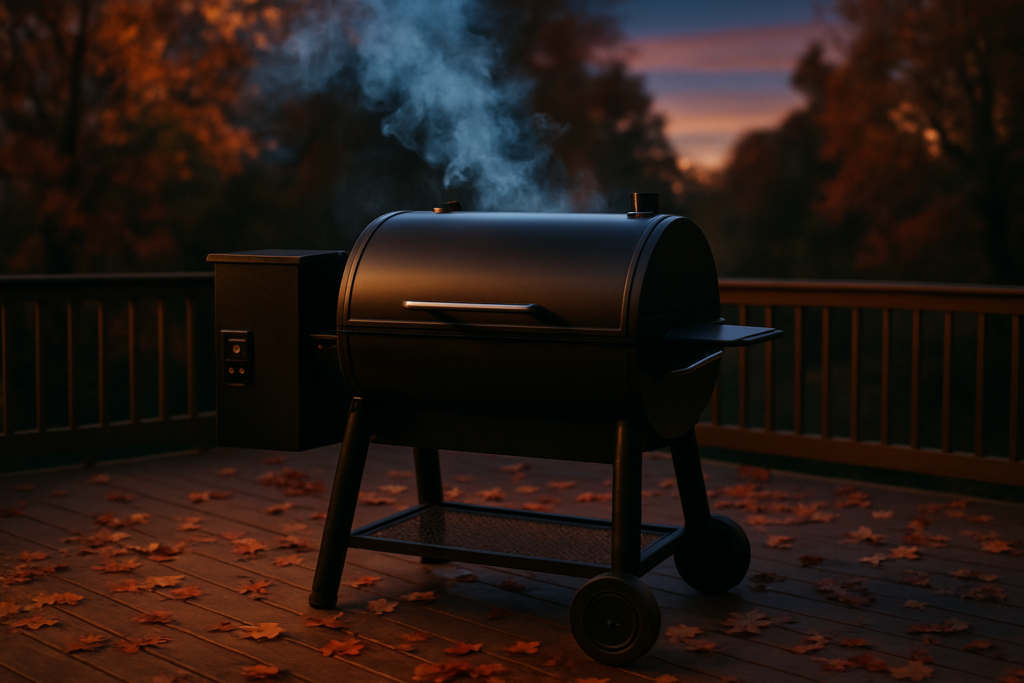
Fall BBQ hits different in Canada.
Cooler ambient temperatures, sunset before dinner, and the smell of smoke drifting through leaves. This guide covers what actually changes when the temperature drops below 50F, which cold-weather gear is worth buying, and the fall recipes that pair with autumn cooking.
In this guide (jump ahead)
- What changes when the temperature drops
- Cold-weather essential #1: Insulation blanket
- Cold-weather essential #2: All-weather grill cover
- Cold-weather essential #3: Wireless meat thermometer
- Cold-weather essential #4: A weatherproof mat
- Cold-weather essential #5: Heavier hardwood pellets
- Best fall recipes to smoke
- Fall BBQ hosting tips
- What to skip in fall BBQ
- Related PitPrimer guides
- Editor’s ranking
- Related PitPrimer guides
Disclosure: PitPrimer earns commission on qualifying purchases through Amazon Associates.
What changes when the temperature drops
Below 50F ambient, three things change on your BBQ:
See also: Traeger vs Recteq 2026: The Enthusiast Pellet Grill Head-to-Head (Which Ranks Higher?)
- Fuel consumption increases 30-50%. A brisket that took 6 lb of pellets in July takes 8-10 lb in October.
- Cook times extend 20-40%. Recover time after opening the lid is longer. Every peek costs more.
- Temperature stability declines. Wind chill affects thin-walled smokers significantly.
Below 25F, add another 20% to fuel and time. Below freezing with wind: consider an insulation blanket essential, not optional.
Cold-weather essential #1: Insulation blanket
The single most impactful cold-weather accessory. A model-matched insulation blanket cuts fuel consumption 30-50% and stabilizes temperature within +/- 10F even in windy Alberta November.
See also: Best BBQ Insulation Blanket 2026: Traeger, Pit Boss, Kamado, and Universal Cold-Weather Picks
- Traeger Ironwood XL insulation blanket
- Grill Year-Round: Insulates your grill to maintain more consistent temperatures no matter the air temperature.
- Do not use if outside temperature is above 32° F and when operating grill above 350° F.
- Consistency in Any Temperature: Eliminates burning through extra pellets in extremely cold weather
- Traeger Pro 780 insulation blanket
- Weber Smokey Mountain 22″ insulation blanket
- 【Dimension】Measures 38”D x 45”H, fits Weber 22-1/2″ Smoker.
- 【Premium Material】Made of high-density heavy-duty Oxford fabric with PVC coating, providing excellent rain/snow/dust/UV resista…
- 【Waterproof Design】Water-resistant PVC coating keeps your grill completely dry, and a full cover with seam sealing tape makes i…
- Pit Boss insulation blanket
- ð¥【Perfectly Fits】The thermal insulation blanket perfect fit for PIT BOSS PRO SERIES II 1150 WOOD PELLET GRILL, Pefectly fits…
- 【Unique Magnetic Design】- The insulation blanket securely attaches to your grill thanks to built-in heat-resistant magnetstant…
- ð¥【Fire-Resistant Fiberglass Blanket】- Insulated blanket better than any foil blanket. Combining three heat resistant materia…


Cold-weather essential #2: All-weather grill cover
Rain and snow ruin electronics and rust hardware. A model-matched full-coverage cover with UV-stabilized fabric and drainage vents is not optional in fall or winter.
See also: Best BBQ Cover 2026: Pellet Grill, Gas Grill, and Griddle Covers Ranked by Weather Protection
Rule: buy the manufacturer’s official cover for your grill. Aftermarket universal covers rarely fit right, leak at seams, or fly off in wind storms.
- Traeger Ironwood XL cover
- 【Pellet Grill Cover Dimension】Kipiea smoker grill cover for Traeger size measures: 70″W x 22″D x 44″H for Traeger Ironwood XL &…
- 【100% Waterproof Protection】Want to protect your valuable pellet grill from the elements with the highest quality outdoor grill…
- 【Heavy-Duty, UV & Tear Resistant】Our wood pellet grill cover for outdoor grill is made from high-density 208 GSM 600D Oxford fa…
- Weber Genesis full-length cover
- Perfect Fit: Measures 60″W x 24″D x 44″H,fit for Weber : Genesis E-315,Genesis E-325,Genesis S-315,Genesis E-330,Genesis S-335;…
- Superior Waterproof Material: Made from premium black 600D polyester fabric, our BBQ grill covers boast superior fade, tear and…
- Secure Fit & Wind Resistant: The two large Velcro straps on each side provide a more fitted appearance and keep the cover in pl…
- Blackstone 36″ hard cover
- Cover measures 36.4″L×22.5″W×2.5″H. This hard cover lid is designed for Blackstone 36″ griddle top, protects your griddle from…
- Compatible with the rear grease management system, guard your griddle in style.
- We add two extra hooks at the back of the cover, which is simple to hang the griddle cover right on the back on your griddle, w…
- Big Green Egg Large cover
- Compatible with LARGE BIG GREEN EGG: Fits grill 22” diameter with fold down side tables, 40” high (Compatible with Large Big Gr…
- WIND RESISTANCE: New design ANTI-RUST metal eyelets, so that the cover can be fastened to the grill legs which could offer a be…
- WITH HANDLE – the protective cover can be easily pulled over grill without damage


Cold-weather essential #3: Wireless meat thermometer
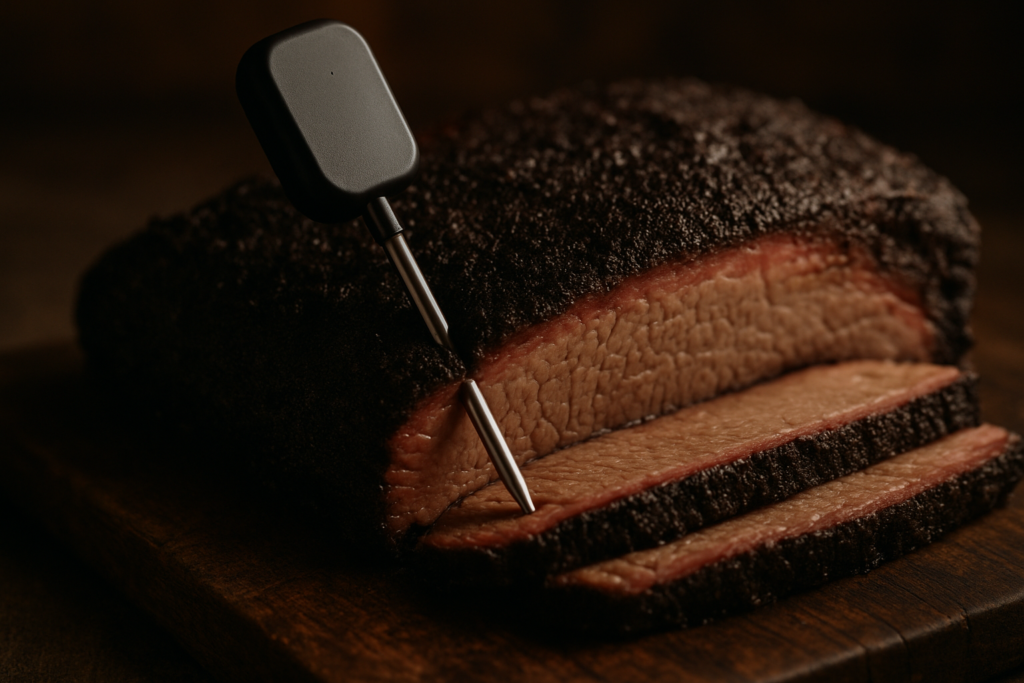
Reading a probe from a warm kitchen instead of walking outside to check every 30 minutes is transformative in fall. Any of the wireless thermometers in our full guide work, but pay extra attention to app range – fall wind and cold reduce Bluetooth range 30-40%.
Best for cold-weather range: BBQOVN BBQ9 (sub-1G WiFi reaches 500+ ft even through cold air) or ThermoWorks Signals (WiFi + BT dual protocol).
See our Best Meat Thermometer 2026 guide.
Cold-weather essential #4: A weatherproof mat
Snow, rain, and mud track BBQ ash and grease into the house. A weatherproof grill mat under your smoker catches drippings and cleans easily.
- Fireproof deck mat under grill
- Large Size for Total Coverage: Massive 60″x40″ coverage creates a total protection zone under your grill! Our grill mats for ou…
- Extreme Heat Resistance: Crafted from fiberglass with dual silicone coatings, this grill mat withstands temperatures up to 2000…
- No More Curling Edges: Tired of flimsy grill mats that curl up and ruin your BBQ? Our under grill mat for deck is designed with…
- BBQ splatter mat

Cold-weather essential #5: Heavier hardwood pellets
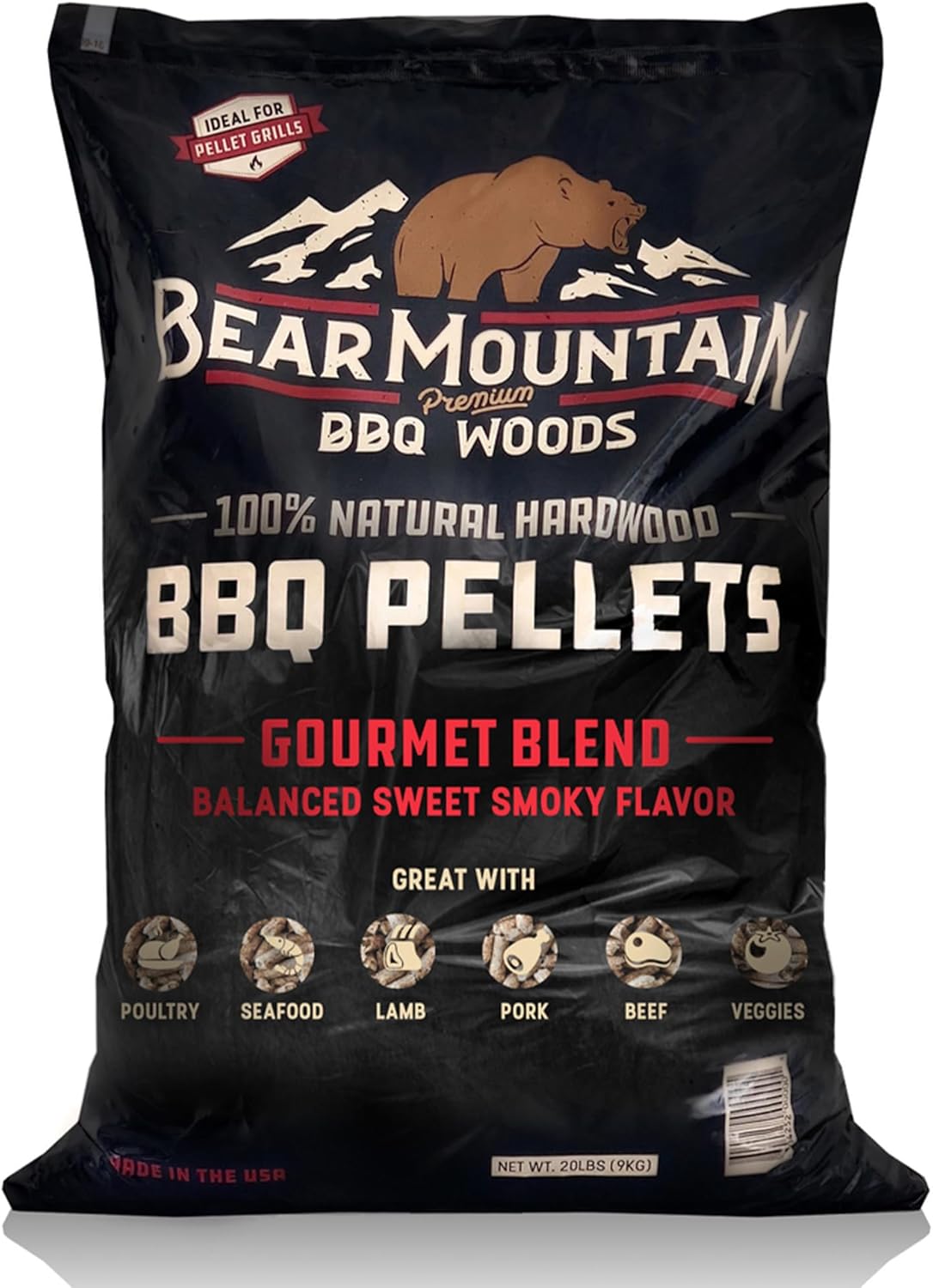
Pellets absorb moisture from cold humid air. Wet pellets burn dirty. Store pellets in an airtight container in a heated garage or shed.
For flavor: use heavier woods in fall. Oak, hickory, and pecan pair better with autumn recipes than mild apple. Save cherry for spring poultry.
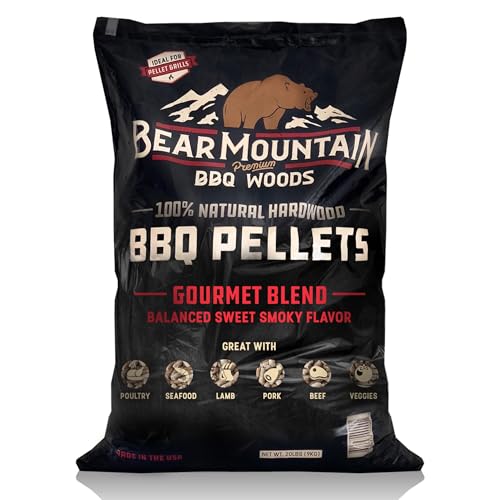
- Bear Mountain Gourmet Oak
- Gourmet Blend BBQ Flavor: Take your grilling to another level by using this pack of Gourmet blend wood pellets which provides a…
- Low Moisture: Enhance your grilling flavor with these smoker pellets that are low in moisture content which guarantees a clean…
- Well-Balanced Flavor: All Natural BBQ pellets add a sweet flavor to your favorite grilled dishes
- Lumber Jack 100% Hickory
- Airtight pellet storage container (40 lb)
- MADE IN THE USA & BPA-FREE: Quality you can trust. This heavy-duty storage bin is manufactured in America using food-safe, non-…
- 40LB HIGH CAPACITY DISPENSER: Designed to hold a full 40-pound bag of wood pellets, charcoal briquettes, or potting soil. The s…
- WEATHERPROOF GASKET SEAL: Features a reinforced locking lid with a rubber gasket to lock out moisture, pests, and ants. Ideal f…

Best fall recipes to smoke
Whole smoked turkey
Fall is turkey season. Brine a 12-14 lb turkey overnight, smoke at 275F over apple + cherry wood until internal 165F in the thigh. Rest 30 minutes. Better than any oven turkey.
Beer can chicken
Classic fall Sunday cook. Whole chicken vertical on a beer can (or dedicated stand), smoked at 275F until 165F internal. Bronze skin, tender meat, 90 minutes total.
Smoked pumpkin pie
Yes really. A pie shell + pumpkin filling smoked at 350F for 45 minutes picks up smoke flavor that transforms the classic dessert. Weird sounding, incredible tasting.
Cold-smoked cheese
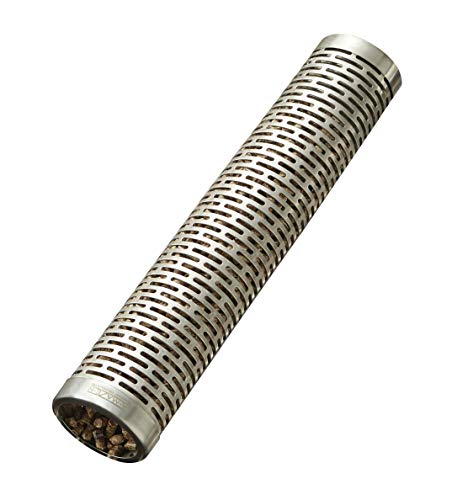
Best when ambient temps are 40-50F. A cold smoke tube filled with pellets sits alongside blocks of cheese. 2 hours of smoke on aged cheddar transforms $8 grocery store cheese into a $25 specialty product.
- A-MAZE-N cold smoke tube
- Produces smoke for up to 4 hours during cold smoking
- Up to 4 hours while supplementing smoke at 225°+ in your smoker or grill
- Designed to supplement smoke in an electric smoker, but can be used in just about any smoker or grill
- Wireless probe for whole turkey
- Smart Display Base with Control: The ThermoMaven G1 wireless meat thermometer features a versatile smart display base that offe…
- Reliable Sub-1G Connectivity: Experience stable, long-range monitoring with our advanced Sub-1G technology, allowing you to tra…
- NIST Certified 6-Sensor Precision: The ThermoMaven G1 digital meat thermometer features 6 sensors (5 internal and 1 external) w…

Fall BBQ hosting tips
- Start the fire earlier than you think. Add 45-60 min to your usual pre-heat time in ambient temps below 50F.
- Serve indoors, cook outdoors. Warm plates matter more in fall. Preheat plates in a 200F oven before plating.
- Keep the smoker away from the deck door. Cold air rushing in every time someone checks on the cook drops indoor temps fast.
- Set up outdoor seating with blankets and a fire pit. BBQ is more social when guests want to stay outside near the smoker.
- Plan for a rest period. Brisket and pork shoulder benefit from an even longer rest in cool weather – 3-4 hours in a well-insulated cooler is not overkill.
What to skip in fall BBQ
- Portable propane camping stoves for main cooks. Propane vaporization is worse in cold; regulators can freeze. Save propane for backup, not main cook.
- Anything requiring precise low-temp control on a thin-walled smoker without insulation blanket. Add the blanket or accept +/- 20F swings.
- Cold-smoking meat. Meat cold smoked in fall temps risks food safety issues – stick to cheese and salt cures.
- Long cooks without a backup fuel plan. Running out of pellets at hour 8 of a brisket at midnight in November is a genuinely bad situation.
Related PitPrimer guides
- Best Pellet Smoker 2026
- Best Traeger Accessories 2026 (includes insulation blankets)
- Best Meat Thermometer 2026
- How to Smoke Brisket
Editor’s ranking
Fall BBQ essentials: insulation blanket (matched to your smoker) + model-matched cover + wireless meat thermometer with WiFi range + airtight pellet storage. Total add-on cost: $200-400.
Best fall recipes: whole smoked turkey, beer can chicken, smoked pork shoulder, cold-smoked cheese. Best fall woods: oak, hickory, pecan.
Fire the smoker 45 minutes earlier than you think you need to. Plan indoor plating with pre-warmed plates. Have a backup fuel source. And take advantage of the season – fall BBQ smells and tastes better than summer BBQ.
About this guide
Our recommendations synthesize manufacturer specifications, published editorial reviews (AmazingRibs, Wirecutter, Serious Eats, Meathead), and community feedback from BBQ forums (r/smoking, r/BBQ, Smoking Meat Forums), cross-checked against real-world reports. We do not accept payment for recommendations.
Last reviewed: July 2026
Related PitPrimer guides
- Best BBQ Cover 2026: Pellet Grill, Gas Grill, and Griddle Covers Ranked by Weather Protection
- Best BBQ Holiday Gift Guide 2026: Gifts for Grillers at Every Budget
- Best BBQ Setup for Football Watch Parties 2026: Grill, Warming, Cooler, and Serving Complete Guide
- Best Traeger Accessories 2026: Folding Shelves, Grill Covers, Pellets, Probes, and Grate Upgrades
Frequently asked questions
How were these products selected?
This guide is a research-based synthesis of product specs, brand reputation, current Amazon reviews, and category trends. It is not a hands-on review – use it to narrow options before you buy.
What price range should I expect?
Prices vary significantly across the categories above. Entry options start at the lower end of each tier listed, while premium picks can be several times more. Amazon pricing changes frequently, so confirm current numbers on the product listings.
Should I always buy the most expensive option?
Not necessarily. Premium products offer better materials, longer warranties, and higher-end features, but mid-tier picks meet the needs of most buyers. Match the pick to your actual use case rather than defaulting to the top of the price range.
How often is this guide updated?
This guide is refreshed as new products launch and older picks are discontinued. Amazon pricing and stock change daily – always confirm current price and availability on Amazon before purchase.
Where is the best place to buy?
Amazon is linked throughout this guide because it typically has broad selection, current pricing, and standardized return policies. Direct manufacturer sites and specialty retailers are also options depending on category and preference.
Shop the Amazon Storefront
Every pellet smoker, grill, and BBQ accessory recommendation – curated in one Amazon Storefront.
Try Amazon Prime free for 30 days – fast pellet and BBQ ingredient delivery
As an Amazon Associate and Amazon Influencer, we earn from qualifying purchases at no extra cost to you.