Affiliate disclosure: As an Amazon Associate, PitPrimer earns from qualifying purchases at no additional cost to you. Product availability subject to change.
Kingsford is not the best-reviewed charcoal on enthusiast forums, and it is still the best-selling briquette brand in America by a wide margin. That gap between forum consensus and actual sales data is worth understanding before buying charcoal based on either signal alone – they are measuring different things, and both are useful depending on what you are optimizing for.
Bestseller Status vs. Enthusiast Rankings
Enthusiast rankings tend to favor lump charcoal and specialty briquette brands for flavor purity and burn characteristics; sales data favors consistency, availability, and price. Kingsford wins on the second set of criteria so decisively that it remains the default choice for most American households, even though a lump-charcoal specialist like Jealous Devil will out-perform it on hotter, cleaner burns in a side-by-side test. Neither list is wrong – they are answering different questions.
At a Glance
| Brand | Type | Why It Sells | Best For |
|---|---|---|---|
| Kingsford Original | Briquette | Market leader, consistency, availability | Everyday grilling, beginners |
| Weber Briquettes | Briquette | Weber ecosystem trust, consistent burn | Weber kettle and charcoal grill owners |
| Royal Oak Premium | Briquette | Hardwood-based, cleaner burn than basic briquettes | Step-up from basic Kingsford |
| Jealous Devil Lump | Lump | High heat, long burn, minimal additives | Searing, high-heat cooks, enthusiasts |
Kingsford Original

- READY TO GRILL QUICKLY: Kingsford Original Charcoal Briquettes light fast and are ready to cook on in about 15 minutes, thanks…
- HOTTER BURN: Enjoy consistent fire—perfect for backyard barbecues, family gatherings, tailgates, camping and grilling parties
- AUTHENTIC WOOD SMOKE FLAVOR: Made with 100% natural ingredients and real American wood, Kingsford delivers authentic, smoky BBQ…
Kingsford’s dominance is not an accident of marketing – it is built on being available at literally every grocery store and hardware store in the country, burning predictably batch to batch, and costing less per pound than most competitors. The trade-off enthusiasts point to is a slightly heavier ash output and a mineral char-binder taste some palates notice more than others, especially compared to hardwood lump. For the overwhelming majority of backyard cooks doing standard grilling rather than chasing competition-level results, that trade-off is invisible in practice, which is exactly why it remains the top seller.
Weber Briquettes

- Fuel the perfect grilling experience
- Ready to use in 20 minutes
- Easy and quick to light and burn for a long time
Weber’s own briquette line sells heavily on brand trust from people who already own a Weber kettle or charcoal grill and default to the matching fuel brand without shopping around extensively. Performance-wise, it is genuinely comparable to Kingsford’s tier, a solid, consistent briquette rather than a dramatically different product, but it benefits from being the fuel Weber itself recommends and often stocks alongside its grills at retail, which drives a meaningful chunk of its sales volume.
Royal Oak Premium
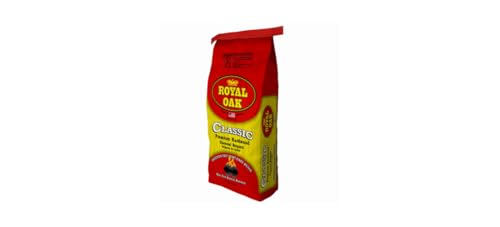
- Sold in 15.4-pound bag
- Ready to cook in 15 minutes
- Special ridges deliver better airflow
Royal Oak sits a step up from basic briquettes in the eyes of a lot of buyers who have tried Kingsford and want something that burns a bit cleaner without jumping all the way to pure lump charcoal. It is made with a higher hardwood content than Kingsford’s standard formula, which shows up as somewhat less ash and a cleaner-tasting result on longer cooks, at a price that is still close enough to basic briquettes that the upgrade does not feel like a real budget commitment.
Jealous Devil Lump

- Hardwood Charcoal for High-Heat Grilling: Specially designed to burn hotter for faster cooking and adds a subtle, earthy flavor…
- All-Natural with No Additives: Made from pure hardwood with no chemicals or fillers, this charcoal resists popping and sparking…
- Dense, Easy-Lighting Hardwood Lumps: Crafted from dense South American hardwood, the lumps ignite quickly and are ready in abou…
This is the outlier on this list – a lump charcoal, not a briquette, and priced meaningfully higher than any of the other three. It sells extremely well within the enthusiast segment specifically because it burns hotter and longer than typical lump competitors, with minimal additives or binders, which matters for high-heat searing and longer cooks where consistent temperature over hours is the whole point. It is not the choice for someone grilling burgers twice a month on a budget; it is the choice for someone who cooks often enough that burn quality and consistency show up in the actual results.
Briquette vs. Lump: The Difference That Actually Matters
Briquettes are manufactured from compressed charcoal dust and a binder, which gives them a uniform size and predictable, longer burn time, useful for consistent temperature over a multi-hour cook. Lump charcoal is made from whole pieces of hardwood charred directly, which burns hotter and lights faster but less predictably, since piece sizes vary within a bag. Neither is universally better – briquettes suit low-and-slow cooks and beginners who want predictable results, while lump suits high-heat searing and cooks who have built enough experience to manage a less uniform burn.
Why Price Per Pound Isn’t the Whole Story
Kingsford’s lower per-pound price looks like the obvious value winner until you account for burn efficiency and ash output – a briquette that produces more ash and burns slightly less efficiently per pound can end up costing a similar amount per actual cook once you are using more of it to hit and hold the same temperature. This is not a knock on Kingsford specifically; it is a reminder that sticker price per bag is a weaker comparison point than cost per cook, which is harder to calculate but a more honest number if charcoal spending adds up meaningfully in your household over a season.
Storage and Shelf Life
Charcoal, briquette or lump, degrades in quality if it absorbs moisture from humid air or direct exposure, which shows up as harder-to-light fuel and inconsistent burns even from a reputable bag. A sealed container, or the original bag closed tightly and kept in a dry space like a garage or shed rather than directly on damp concrete, preserves quality far longer than an open bag left exposed between uses, worth the extra few minutes of care given how directly it affects your next cook’s results.
Lighting Method Matters as Much as the Brand
A meaningful share of the flavor complaints people attribute to a specific charcoal brand actually trace back to lighting method rather than the charcoal itself – lighter fluid residue, even from a small amount used to speed up ignition, imparts a chemical taste that lingers noticeably longer than most people expect, regardless of whether you’re burning Kingsford or Jealous Devil. A charcoal chimney starter, using a small amount of newspaper or a firestarter cube rather than fluid, produces a cleaner-tasting result across every brand on this list and is worth the modest investment if you’re still lighting charcoal with fluid out of habit rather than preference.
Availability and Regional Differences
Not every brand on this list is equally easy to find in every region. Kingsford and Royal Oak have the broadest big-box and grocery-store distribution nationally, which is a real factor in why they sell as well as they do beyond pure product quality. Jealous Devil, being a smaller, enthusiast-oriented brand, is more commonly found through specialty retailers or ordered online than picked up at a local hardware store, which adds a small logistics step, and sometimes shipping cost, that basic briquettes don’t require. Weber’s briquettes typically follow wherever Weber grills themselves are sold, which covers most major retailers but isn’t quite as universal as Kingsford’s shelf presence.
How Much Charcoal a Typical Cook Actually Uses
Estimating charcoal needs correctly avoids both running out mid-cook and paying to store more than you’ll use before it degrades. A standard kettle grill cooking direct-heat items like burgers or chicken typically uses a half to a full chimney of briquettes, roughly two to four pounds, per session. Longer, lower-temperature cooks using the two-zone method for ribs or a pork shoulder use less per hour but run for many more hours total, often landing in a similar total-pound range for a single extended cook. Buying the large multi-bag value packs makes sense for anyone grilling weekly through the season; smaller single bags are more sensible for occasional cooks who don’t want a half-used bag degrading in a garage for months between uses.
Charcoal Grade and Ash-Pan Maintenance
Regardless of which brand you settle on, ash buildup in a grill’s ash pan or catcher affects airflow and, over time, burn consistency – a detail that’s easy to overlook when comparing charcoal brands on flavor and heat alone. Briquettes generally produce more ash than lump charcoal per pound burned, which means Kingsford, Weber, and Royal Oak owners benefit from clearing the ash catcher more frequently than a Jealous Devil lump user doing a comparable amount of cooking. Letting ash build up past a grill’s rated capacity restricts airflow to the coals themselves and can noticeably hurt a charcoal grill’s ability to reach and hold higher temperatures, which sometimes gets misattributed to the charcoal brand when the actual cause is simply an ash pan that hasn’t been emptied in a while.
Disposal and Environmental Considerations
Cooled charcoal ash is generally safe to dispose of in regular household trash once fully extinguished and cooled, typically waiting at least 24 to 48 hours after a cook before scooping it out, since embers can smolder far longer than they appear to from the surface. Some municipalities and gardeners repurpose cooled wood-based lump charcoal ash as a soil amendment in small quantities, though briquette ash containing binders and additives is generally less suited to that reuse than pure lump charcoal ash. Whichever brand you’re using, never dispose of ash while it’s still warm, and keep a metal ash bucket on hand specifically for transferring hot coals rather than using a plastic container that could melt or ignite.
A Reasonable Way to Decide Between These Four
If you’re not sure which of these four to start with, defaulting to whichever is easiest to find locally is a genuinely reasonable strategy rather than a compromise – for most households that’s Kingsford, and stepping up to Royal Oak or Jealous Devil later once you’ve noticed something specific you want to improve is a sensible, low-risk way to work up the list.
Frequently Asked Questions
Is more expensive charcoal always better quality? Generally price does track quality and purity of ingredients reasonably well in this category, but better is also cook-dependent – a beginner grilling burgers does not need Jealous Devil’s high-heat, long-burn characteristics the way a competition cook chasing a fourteen-hour brisket does.
Can lump charcoal and briquettes be mixed in the same cook? Yes, and some experienced cooks do this deliberately – lump for a hot initial sear phase, briquettes layered in for a more predictable, longer-burning base temperature afterward.
Does briquette binder or additive content affect food flavor? Modern major-brand briquettes use minimal, food-safe binders that most palates will not detect once the charcoal is fully ashed over before cooking begins; the more common flavor complaint is about lighter fluid residue from improper lighting, not the briquette formula itself.
The Recommendation
If you want the fuel that is easiest to find, cheapest, and predictable enough for weekly grilling, Kingsford’s sales numbers reflect a genuinely reasonable default rather than just inertia. If you already own Weber gear and want brand consistency, their briquettes are a comparable performer at a similar price. Royal Oak is the sensible step-up for anyone who has noticed Kingsford’s ash output and wants a cleaner burn without a big price jump. And if burn quality and high heat matter enough to your cooking to justify the cost, Jealous Devil’s lump is the pick that enthusiast rankings and a meaningful slice of actual sales data agree on.