Affiliate disclosure: As an Amazon Associate, PitPrimer earns from qualifying purchases at no additional cost to you. Product availability subject to change.
A single-probe instant-read thermometer answers one question well: is this piece of meat done right now. A multi-probe system like the FireBoard 2 Drive answers a different question that matters more on a long smoke: what’s happening across the whole cook – ambient smoker temperature, three or four different cuts, and the trend over the next six hours – without walking outside to check each one by hand.
Who Needs a Multi-Probe System
If you regularly run long smokes with multiple cuts on the grate at once (a full packer brisket plus a couple of racks of ribs, for example), or if you smoke overnight and want to monitor the cook from inside without repeatedly checking a single probe, a system like the FireBoard 2 Drive solves a real problem. It’s also worth it if you’ve had a smoker run away in temperature overnight and ruined a cook – continuous ambient monitoring with phone alerts catches that before it becomes a wasted brisket.
Skip it if your cooking is mostly quick, single-item grilling where an instant-read thermometer answers the question fast enough – a multi-probe system left clipped to a grill for a 15-minute cook is solving a problem you don’t have. It’s built for cooks measured in hours, not minutes.
Spec Comparison
| Spec | FireBoard 2 Drive | Basic Instant-Read Thermometer |
|---|---|---|
| Probe channels | 6 | 1 (handheld) |
| Connectivity | WiFi + Bluetooth, cloud logging | None needed |
| Fan/driver control | Yes, can control a compatible fan for temp regulation | No |
| Cook duration suited for | Long smokes, overnight cooks | Quick checks, any cook length |
| Typical price | $250-280 | $15-100 depending on model |
| Battery/power | Rechargeable, several days between charges | Coin cell or AA, lasts months |
Six Channels: What You Actually Use Them For
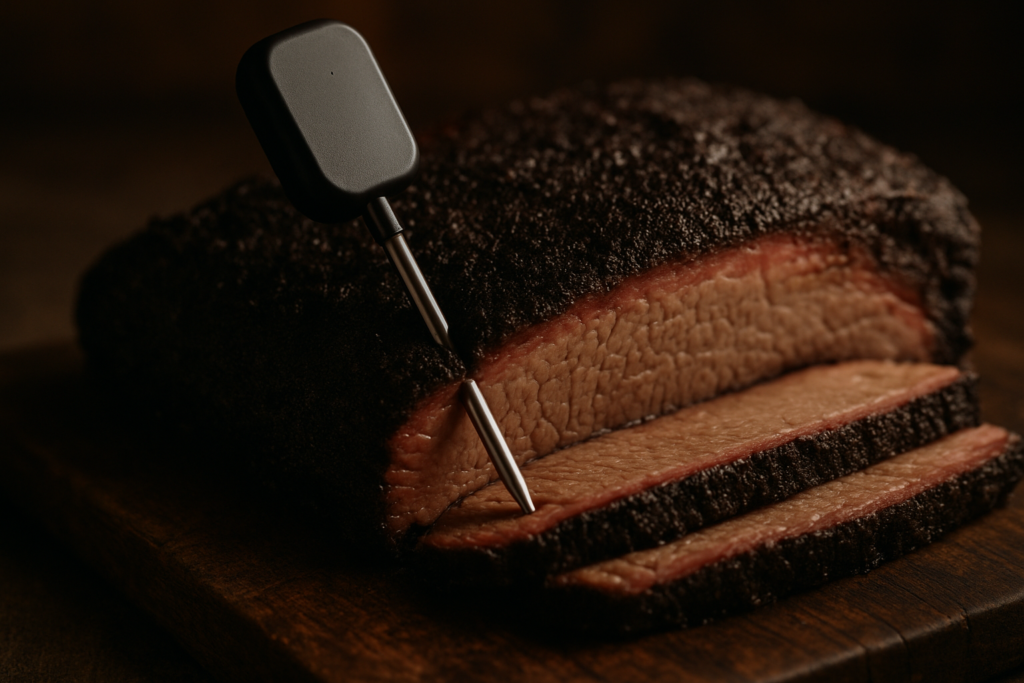
The FireBoard 2 Drive’s headline feature is six independent probe channels, and in practice most users settle into a pattern: one probe dedicated to ambient smoker temperature, and the remaining channels split across whatever proteins are on the grate that day. For a typical brisket-plus-ribs cook, that might mean one probe in the brisket’s thickest point, one in a rack of ribs, and the ambient probe confirming the smoker itself is holding steady – all visible on one app screen instead of physically checking each item.
Lineups and configurations in this category change often — check current models, sizes, and pricing directly on Amazon.
Search on Amazon →The cloud logging is a genuinely useful side benefit beyond real-time monitoring – a graphed record of exactly how a cook’s temperature moved over time, which is the kind of detail that turns “that brisket came out great, not sure why” into a repeatable process you can reference for the next cook.

- Different type thermocouples measuring range: J-type:-210℃to1200℃(-346℉to2192℉),K-type:-200℃to1372℃(-328℉to2501℉
- T-type:-250℃to400℃(-418℉to752℉), E-type:-150℃to1000℃(-238℉to1832℉
- N-type:-200℃to1300℃(-328℉to2372℉), R-type:0℃to1767℃(32℉to3212℉)
Fan Control: The Feature That Sets It Apart
This is the differentiator that separates FireBoard from most multi-probe competitors: the Drive output can connect to a compatible fan and actively regulate a charcoal or offset smoker’s temperature by adjusting airflow, similar to what a dedicated temperature controller does as a standalone product. For someone running an offset or kettle smoker who wants pellet-grill-level temperature stability without switching hardware entirely, this feature alone can justify the price – it’s solving the exact problem that makes offset smoking hard for beginners.
Where a Simple Instant-Read Thermometer Still Wins

- Instant Read Food Thermometer | Our instant read thermometer features a temperature probe and advanced, highly accurate technol…
- Multi-Use | From bbq thermometer to baking thermometer, our digital food thermometer for cooking is perfect for meats, liquids,…
- Easy-Read Digital Thermometer For Cooking | Large instant thermometer dial with bright blue backlight means you can always read…
For grilling steaks, chicken, or anything cooked in under 30 minutes, a good instant-read thermometer is faster to use, requires no setup, no app, and no charging, and answers the only question that matters – is it done – in about three seconds. Most serious cooks end up owning both: an instant-read for quick grilling and searing checks, and a multi-probe system reserved specifically for long smokes where continuous monitoring earns its keep. Buying a multi-probe system as your only thermometer would leave you underserved for quick, everyday grilling tasks.
App Reliability and Range
WiFi-connected thermometers live or die on connection reliability, and this is where FireBoard has built a stronger reputation than many competitors – fewer dropped connections mid-cook, and a genuinely useful web dashboard in addition to the phone app for anyone who wants to check a cook from a computer. Range on Bluetooth alone (without WiFi) is limited to roughly the size of a backyard, which is fine for most home setups but worth knowing if you’re hoping to monitor a smoker from well outside normal WiFi range.
Setup and Learning Curve
Initial setup – connecting to WiFi, naming probes, setting target temperature alerts – takes about fifteen minutes and is more involved than clipping on a simple wireless thermometer. The fan control feature specifically requires a compatible fan sold separately and some initial calibration to match your specific smoker’s airflow characteristics, which is a genuine weekend project the first time rather than a plug-and-play addition. Budget that setup time realistically rather than expecting full function out of the box on your first cook with it.
Reading the Data: What the Graphs Actually Tell You
Beyond simple pass/fail temperature alerts, the real long-term value of a logging multi-probe system is pattern recognition across cooks. After a handful of sessions, the graphed history starts to reveal things a single cook doesn’t – how your specific smoker’s ambient temperature drifts through a typical burn cycle, how long a given cut of meat typically takes to push through the stall (the well-known temperature plateau during brisket and pork shoulder cooks where evaporative cooling briefly halts the internal temperature’s rise), and which vent or fuel adjustments actually move the needle versus which ones you only imagined were helping. Owners who review their cook history regularly report faster improvement in their fire management skills than those who treat the app purely as a real-time alert system and never look back at past graphs.
Placement and Probe Care
Ambient probes should be positioned at grate level near the food rather than near the lid or a vent, where readings can run significantly hotter or cooler than what the food is actually experiencing – a common source of “my smoker runs way hotter than the dial says” confusion that’s really a probe placement issue. Food probes need to be inserted into the thickest part of the cut, avoiding bone and large pockets of fat, both of which throw off readings in either direction. After each cook, a light wipe-down of the probes (most are dishwasher-unsafe despite looking like they could handle it) extends their working life meaningfully compared to leaving cooked-on residue to bake onto the metal during the next use.
Common Owner Complaints, and Which Ones Hold Up
The most frequent complaint concerns probe wire durability over time – the thin cables that connect each probe to the base unit are the most failure-prone component after extended use, particularly if they’re regularly pinched in a smoker lid or exposed to direct high heat rather than routed through a vent or gap. Replacement probes are available individually, which softens this issue but still represents an ongoing cost worth knowing about upfront rather than assuming a one-time purchase covers the unit’s full lifespan. A smaller number of owners report occasional WiFi dropouts in homes with a weak signal reaching the backyard or garage where the smoker lives – a basic WiFi extender resolves this for most people, and it’s more of a home network issue than a device flaw. Complaints about the core temperature accuracy or the six-channel monitoring itself are rare, which matches the brand’s core reputation being built on measurement reliability specifically.
Comparing the Investment to a Standalone Temperature Controller
For someone specifically chasing pellet-grill-like stability on a charcoal or offset smoker, the alternative to FireBoard’s fan-control add-on is a dedicated standalone temperature controller sold on its own, without the multi-probe monitoring built in. Buying the FireBoard with its Drive output and a compatible fan generally costs somewhat more than a basic standalone controller alone, but folds in the six-channel food monitoring most standalone controllers don’t offer at all – worth factoring in if you were going to buy a separate meat thermometer system anyway, since the combined unit avoids paying for two separate pieces of hardware that each do half the job.
Battery Life and Charging Habits
The base unit runs on a rechargeable battery rather than disposable batteries, which is more convenient long-term but does require building a habit of charging it between cooks rather than assuming it’s always ready to go the way a coin-cell device tends to be. Most owners report several days of typical use between charges, comfortably enough for a single long cook without needing to charge mid-session, but it’s worth topping it off after each significant use rather than discovering a low battery right as a smoke is starting.
Frequently Asked Questions
Can the FireBoard 2 Drive be used for grilling as well as smoking? Yes, though its real value is concentrated in longer cooks where continuous monitoring matters; for quick grilling, the setup overhead makes an instant-read thermometer the faster tool for the job.
How many smokers can the fan control feature work with? The Drive output is designed to work with a range of compatible fans across different smoker types, though compatibility and airflow tuning varies by smoker design – checking specific compatibility before buying the fan accessory is worth the few minutes it takes.
What happens if I lose WiFi mid-cook – does monitoring stop completely? Bluetooth continues working as a local fallback within roughly backyard range even if WiFi drops, so you can still check the app from a phone nearby; only the remote, away-from-home access depends on the WiFi/cloud connection specifically.
Does the cloud logging feature require an ongoing subscription? Core logging and app functionality work without an ongoing subscription cost for typical home use; confirm current terms before buying since cloud service policies can change between model generations.
Sharing a Cook or Getting Remote Help
One underrated use of a cloud-connected system like this: sharing a live cook link with someone else, whether that’s a family member checking on dinner progress from inside the house or a more experienced pitmaster friend giving real-time advice on a difficult cook remotely. This kind of remote troubleshooting isn’t possible at all with a standalone, non-connected thermometer, and it’s turned out to be one of the more genuinely useful, less-advertised features for people who are still building confidence with longer smokes and want a second opinion without needing someone physically present at the smoker.
Verdict: Is It Worth It?
If you regularly run long, multi-item smokes, want ambient temperature alerts that prevent a runaway smoker from ruining an overnight cook, or you’re running an offset smoker and want the fan-control feature’s pellet-grill-like stability, the FireBoard 2 Drive earns its price clearly. If your cooking is mostly quick grilling, a $20-40 instant-read thermometer answers the only question that matters faster and with zero setup. For most serious backyard cooks, the realistic answer is owning both – they solve genuinely different problems rather than competing for the same job.