Affiliate disclosure: As an Amazon Associate, PitPrimer earns from qualifying purchases at no additional cost to you. Product availability subject to change.
A cooler is the piece of tailgating and camp-cooking gear people are most likely to underbuy, right up until a multi-day trip where the ice melts by day two and everything is swimming in lukewarm water by day three. The YETI Tundra 65 is the cooler most often held up as the premium standard, and the real question is whether it earns a price several times higher than a big-box hard-sided cooler, or whether that reputation is mostly marketing.
A cooler is also one of the least glamorous purchases in a backyard cooking setup, which is part of why it’s so easy to underspend on relative to the grill or smoker it’s sitting next to – nobody plans a purchase around a cooler the way they plan around a new smoker, even though a failing cooler on day two of a camping trip causes more immediate frustration than almost any other piece of gear failing.
Who This Cooler Is For, and Who Should Buy Something Cheaper
The Tundra 65 makes sense if you’re doing multi-day trips where ice retention genuinely matters – camping, extended tailgates, hunting or fishing trips where the cooler needs to hold temperature for days rather than hours. It also makes sense if the cooler doubles as a seat or a step around a campsite; the rotomolded construction is built to take that kind of load without cracking, which most budget coolers explicitly are not designed for.
Buy a cheaper hard-sided cooler instead if your use case is mostly single-day trips – a tailgate that starts and ends the same day, a backyard party, a day at the lake. Ice retention differences between a premium and budget cooler mostly show up after 24-48 hours; for anything shorter, a $60-100 cooler keeps drinks cold just fine and the YETI’s extra retention capacity goes unused.
Spec Comparison
| Spec | YETI Tundra 65 | Standard Hard-Sided Cooler (45qt) |
|---|---|---|
| Construction | Rotomolded, thick-wall insulation | Injection molded, thinner walls |
| Ice retention (real-world) | Multiple days | Roughly 24-36 hours |
| Capacity | ~65 quarts (~39-42 cans + ice) | ~45 quarts |
| Load-bearing (can stand/sit on it) | Yes, rated for it | Not rated for it |
| Typical price | $350-400 | $60-120 |
| Weight (empty) | Heavy – roughly 29 lbs | Lighter, roughly 15-18 lbs |
Ice Retention: Where the Price Actually Shows Up
This is the core of the Tundra 65’s reputation, and it holds up in practice. The thick rotomolded walls and gasketed lid seal in cold air far more effectively than a standard injection-molded cooler, and the practical result is ice that’s still substantially solid on day three or four of a trip rather than fully melted by the end of day one. If your trips are long enough that this matters, it’s the single biggest reason to pay the premium – nothing about the rest of the cooler’s features comes close to mattering as much as this one performance difference.
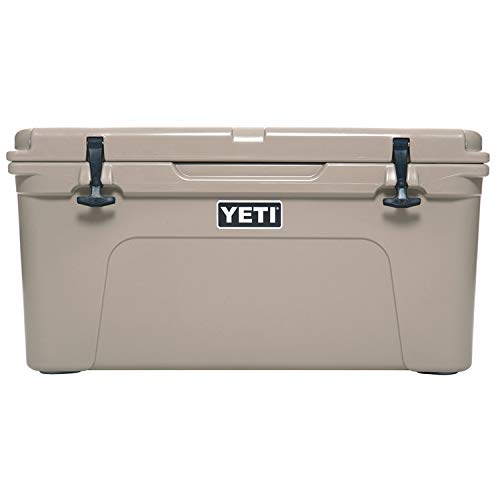
- The YETI Tundra 65 is just as adept at keeping your catches cold in the field as it is storing the drinks and food for your bac…
- Ice stays ice thanks to up to 3 inches of PermaFrost Insulation and an extra thick FatWall design is certified Bear-Resistant
- The Rotomolded Construction makes the Tundra armored to the core and virtually indestructible so wherever you decide to take it…
For shorter outings, this advantage is real but functionally invisible – both a premium and budget cooler will keep ice mostly intact through a single day, so you’re paying for capability you won’t use on a one-day trip.
Durability and the “Sit On It” Factor
YETI markets the Tundra line’s load-bearing capability heavily, and it’s not just marketing copy – the rotomolded construction genuinely holds up to being used as a bench or step around a campsite in a way that would crack or deform a standard cooler over time. Latches are heavy-duty rubber rather than the plastic clips common on budget coolers, which matters after repeated use in cold weather when plastic gets brittle. If your cooler takes real abuse – thrown in truck beds, used as camp furniture, dragged over rocky terrain – this durability difference compounds over years of ownership in a way that’s hard to appreciate until a budget cooler’s latch snaps at an inconvenient moment.
Where a Standard Cooler Still Makes Sense
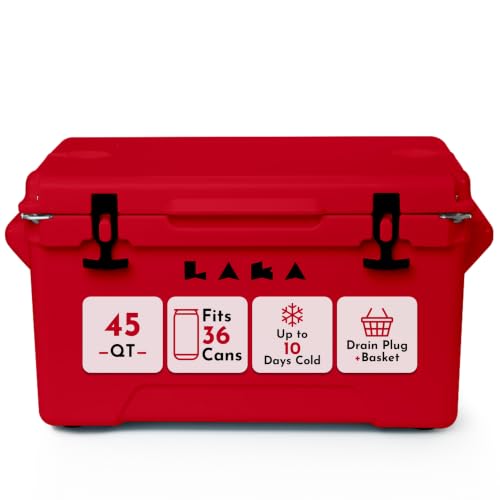
- ICE FOR THE LONG HAUL: Up to 10 days cold with airtight gasket and thick PU foam walls so drinks stay chilled for beach, campin…
- 45 QUART CAPACITY: Holds about 36 cans plus up to 45lb of ice, roomy enough for food, meat, and beverages without the bulky ove…
- RUGGED ROTOMOLDED BODY: Rotomolded polyethylene shell with heavy duty rubber latches built to handle trips, fishing, and jobsit…
A quality standard hard-sided cooler in the 45-quart range covers the vast majority of single-day and short weekend use cases well, at a fraction of the price and weight. The Tundra 65’s extra weight – nearly 30 pounds empty, before ice and contents – is a real consideration if you’re carrying it any distance rather than loading it once into a vehicle and setting it down at a fixed spot. For tailgaters who park close to their setup, that weight is a non-issue; for anyone hiking a cooler any real distance, it’s worth factoring in.
Capacity and Real-World Packing
The 65-quart size holds roughly what most people expect for a weekend group – enough drinks and food for a family or small group over two to three days, once you account for the ice taking up meaningful volume alongside the contents. It’s worth noting that manufacturer capacity numbers assume mostly-empty space filled with ice; pack it with a realistic ratio of food, drinks, and ice rather than expecting the full rated capacity in usable storage.
The Rest of the YETI Tundra Lineup
The 65 is the size most commonly recommended as the do-everything option, but it isn’t the only choice if the specifics of your trips point elsewhere. The Tundra 45 suits smaller groups or shorter trips where the 65’s size and weight are more than you need, and is noticeably easier to lift and carry solo. The Tundra 110 and larger sizes step up for genuinely large groups or extended trips – multi-family camping, a week-long fishing trip – where the 65’s capacity would run out before the ice does. Sizing up “just in case” is a common instinct worth resisting unless your trips regularly justify it; a too-large cooler is heavier, more awkward to transport, and wastes ice cooling empty space on the trips that don’t need the full capacity.
Color and Finish Options
YETI offers the Tundra 65 in a range of colors beyond the standard options, and while this is mostly a personal preference decision, it’s worth noting the practical point made earlier about lighter colors reflecting more heat in direct sun – a genuine, if secondary, factor if your cooler regularly sits in full sun for extended periods rather than in shade or a truck bed.
Common Owner Complaints, and Which Ones Hold Up
The complaint that comes up most consistently is weight, especially when full – a loaded Tundra 65 with ice and contents can approach 60-70 pounds, which is a real two-person carry for many people and worth planning for rather than discovering at the tailgate. Some owners also note that the drain plug design, while functional, requires tilting the cooler to fully empty meltwater rather than draining flat on the ground, a minor inconvenience compared to competitors with a lower-mounted drain. Complaints about the actual insulation performance or the latch and hinge durability are comparatively rare, which matches the brand’s reputation being built specifically on those two attributes holding up over years of real use rather than marketing claims alone.
Ice Retention in Real-World Testing
Independent testing and long-term owner reports consistently show the Tundra 65 holding a meaningful amount of solid ice past the 4-5 day mark in moderate outdoor temperatures, with performance dropping faster in direct sun or high heat as with any cooler. The practical takeaway for buyers: pre-chilling the cooler and its contents before loading, using block ice rather than only cubed ice for longer trips, and keeping it out of direct sun when possible all extend real-world performance meaningfully beyond what a worst-case test suggests – the cooler is doing its job, but basic loading technique still matters for hitting the multi-day claims.
What a Premium Cooler Doesn’t Fix
It’s worth being honest that a premium cooler doesn’t solve every ice-retention problem on its own – how you pack it matters nearly as much as which cooler you buy. Opening the lid frequently, packing warm drinks or food instead of pre-chilling everything first, and storing the cooler in direct sun rather than shade all reduce ice life meaningfully regardless of how good the insulation is. A Tundra 65 packed and used carelessly will underperform a cheaper cooler packed well on a short trip; the premium build’s real advantage shows up specifically on longer trips where good packing technique alone isn’t enough to compensate for lesser insulation.
Frequently Asked Questions
Is the Tundra 65 too big for a two-person camping trip? For a weekend, it’s reasonable even for two people if you value extended ice retention over minimizing size and weight; for shorter trips or smaller groups, a Tundra 45 covers the same performance profile in a more manageable size.
Does the color affect ice retention? Lighter colors reflect more heat and can offer a small real-world edge in hot, sunny conditions compared to darker colors, though the insulation itself is the dominant factor either way.
Does a premium cooler need to be replaced eventually, or does it really last decades? The rotomolded shell itself is built to last many years of regular use; the parts most likely to eventually need attention are the latches and the lid gasket, both of which see the most physical wear and are the first signs of age on an otherwise still-functional cooler.
Are aftermarket accessories like baskets and dividers worth adding? The internal basket is a popular add-on for keeping items like cheese or bread out of melted ice water at the bottom, and most owners who add one report it meaningfully improves the packing experience for food-heavy trips.
Cleaning and Odor Control
Rotomolded coolers are non-porous, which makes them meaningfully easier to fully deodorize than some cheaper coolers with seams or textured interiors that trap odor from spilled drinks or forgotten food. A baking soda and warm water scrub handles most odor situations, and the smooth interior wipes clean quickly compared to textured budget alternatives. Leaving the lid propped open to air dry after cleaning, rather than sealing it shut while still damp, prevents the musty smell that develops in any cooler stored closed with residual moisture inside – a common complaint that has nothing to do with cooler quality and everything to do with storage habits between trips.
Verdict: Is It Worth It?
If your trips regularly run multiple days, if the cooler needs to double as durable camp furniture, or if losing ice mid-trip has actually ruined a cooler’s contents for you before, the Tundra 65’s price is justified by real, measurable performance rather than brand premium alone. If your use case is mostly single-day tailgates or backyard gatherings, a standard hard-sided cooler in a similar capacity will perform nearly identically for the timeframe that matters, at a third of the price or less. The honest dividing line is trip length, not how serious you are about tailgating in general – a one-day event doesn’t need multi-day ice retention no matter how much gear pride is on the line.