Affiliate disclosure: As an Amazon Associate, PitPrimer earns from qualifying purchases at no additional cost to you. Product availability subject to change.
Sous vide sounds like restaurant-kitchen equipment because it started there, but an immersion circulator is one of the more genuinely useful additions to a backyard cooking setup – it takes the guesswork out of hitting a precise internal temperature before you finish a steak or chicken breast on the grill. The buying decision mostly comes down to how much you value precision, app polish, and price, since the core function is similar across most models.
Who Actually Benefits From Sous Vide
If you regularly grill thick cuts and want a guaranteed edge-to-edge medium-rare rather than relying on timing and guesswork, sous vide followed by a quick sear solves that problem more reliably than any other method. It’s also genuinely useful for meal prep – cooking a batch of chicken breasts to a precise, food-safe temperature ahead of time without the risk of overcooking that comes with traditional batch cooking. And it shines for tougher, cheaper cuts (chuck roast, pork shoulder) that benefit from many hours at a controlled low temperature to break down connective tissue without drying out.
Skip it if your grilling is mostly quick-cook items (burgers, sausages, thin cuts) where sous vide’s advantage doesn’t really apply, or if the extra step – bagging, water bath setup, then finishing on heat – feels like more process than you want for weeknight cooking. It’s a tool for people who cook thick cuts or batch-prep proteins regularly, not a universal upgrade for every kind of grilling.
Comparison Table
| Circulator | Temp Accuracy | App Control | Price Tier | Best For |
|---|---|---|---|---|
| Anova Precision Cooker | +/- 0.1-0.2°F | Yes, well-reviewed app | $150-200 | Best balance of accuracy and usability |
| Breville Joule | +/- 0.1°F | App-only, no physical display | $200-230 | Compact storage, app-first users |
| Wancle | +/- 0.5-1°F | Limited or none on base models | $50-70 | Budget entry point |
| Instant Pot Accu Slim | +/- 0.5°F | Basic app support | $60-80 | Casual, occasional use |
Anova Precision Cooker

- Pros have been doing it for years, and now you can too. Sous vide (pronounced sue-veed) is a cooking technique that utilizes hi…
- Our best-seller, only better. The first Anova Precision Cooker launched in 2014 and started a home-cooking revolution — bringin…
- The adjustable clamp makes it an ideal fit on nearly any pot that is deep enough to meet the minimum water depth requirements….
Anova has built the most consistently well-reviewed app experience in this category, with reliable Bluetooth/WiFi connectivity, a large library of built-in recipes with pre-set times and temperatures, and clear physical controls on the unit itself as a backup if you don’t want to touch your phone mid-cook. Temperature accuracy is excellent and the pump is strong enough to circulate water evenly in a full-size stockpot or cooler, which matters more than people expect for larger batch cooks.
Breville Joule
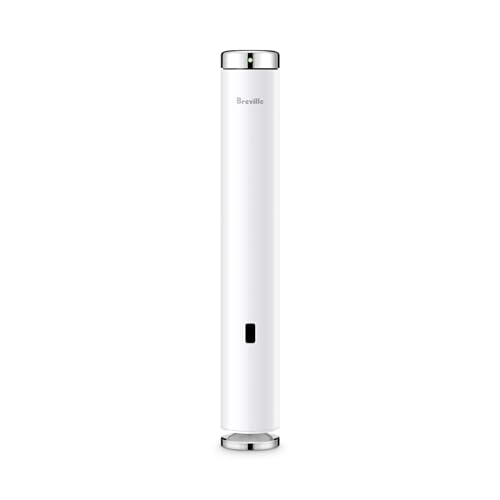
- The Breville Joule Turbo Sous Vide cooker provides an automated cooking experience in your kitchen, powered by the Joule App; P…
- TURBO MODE: Precise results in half the time; Breville’s sous vide machine has a new Turbo feature; Uses complex algorithms and…
- VISUAL DONENESS: Select desired doneness results before you begin cooking your culinary masterpiece; Setting options include Ra…
The Joule takes a different design approach entirely – no physical display or buttons, controlled purely through its app, in exchange for a noticeably smaller, more compact body that stores easily in a drawer rather than taking up cabinet shelf space. Heating power is strong, often reaching target temperature faster than competitors of similar size. The trade-off is real: if your phone dies, or you’re someone who prefers physical dials, the app-only design is a genuine limitation rather than a minor preference.
Wancle

- ✔[Good Performance Sous Vide] Wancle newly released 1100W high-performance sous vide cooker with as high as 1100W power and 18%…
- ✔[Accurate, Silent & Efficient] Wancle precise cooker is capable of precise temperature control (+/- 0.1°C) and time control wi…
- ✔[Easy & Worry-Free Operation] Only one hand is needed to operate the Wancle thermal immersion circulator. The design of 30° sc…
Wancle and similarly priced budget circulators deliver the core function – heating and circulating water to a set temperature – at a fraction of the Anova or Joule price. Accuracy is looser (often a full degree or more of drift versus the premium options’ tenths of a degree), which matters for very precise applications like egg cooking but is unlikely to be noticeable on a thick steak or roast where a degree of variance doesn’t meaningfully change the result. For someone testing whether sous vide fits their cooking style before committing to a premium unit, this is a reasonable way to find out.
Instant Pot Accu Slim
Lineups and configurations in this category change often — check current models, sizes, and pricing directly on Amazon.
Search on Amazon →Instant Pot’s entry into this category leans on brand trust and a slightly more polished basic app than the no-name budget options, while still sitting well below Anova and Joule pricing. It’s a sensible pick for someone who already trusts the Instant Pot ecosystem and wants a low-risk way to try sous vide without a large upfront commitment.

- Perfect results every time: Never over or under cook your food again. The Anova Precision Cooker Nano circulates water at the e…
- What to cook: Sous vide (pronounced “sue-veed”) cooking offers the perfect level of doneness for chicken, fish, vegetables, egg…
- Small but mighty: The 12.8″ Anova Precision Cooker Nano stows away in any kitchen drawer next to the whisk and ladle, so your c…
Does Precision Actually Matter for Backyard Cooks?
Restaurant applications care about tenths of a degree because they’re often cooking delicate proteins like eggs or fish where a couple of degrees changes texture noticeably. For thick steaks, roasts, and chicken breasts destined for a hard sear on a grill afterward, a degree or two of variance from a budget circulator rarely changes the eating experience in a way most people would notice blind. Where precision earns its keep is consistency across many cooks over time and for genuinely temperature-sensitive items like eggs – if that’s a regular part of your cooking, spend up. If it’s occasional steak insurance, a budget unit does the job.
Practical Setup Notes
Any of these circulators needs a container with enough depth to clip onto and enough volume for the pump to circulate properly – a large stockpot or a dedicated sous vide container with a lid works best. Budget for good vacuum-seal or heavy-duty zip bags alongside the circulator itself; a bag that leaks mid-cook is the most common frustration new users report, and it’s almost always a bagging issue rather than a circulator problem.
Temperature and Time Reference Points
Part of what makes sous vide approachable once you’ve done it a few times is that the target temperature directly determines doneness with far more precision than traditional cooking – 129-134°F for a steak that lands medium-rare, 140-145°F for chicken breast held long enough to also be safely pasteurized at that temperature, 165-185°F for tougher cuts like short ribs or pork shoulder held for many hours to break down connective tissue. Most circulator apps, including all four covered here, include built-in guides for common proteins, which removes the need to memorize these numbers early on. What’s worth understanding conceptually rather than just following a chart: lower temperatures within the safe range produce a more tender, less traditionally “cooked” texture, while higher temperatures within the same protein’s safe range produce a firmer, more familiar texture – it’s a genuine spectrum you can tune to preference once you understand the relationship, not just a single correct number per protein.
Common Mistakes New Sous Vide Cooks Make
The most frequent mistake is under-sealing the bag, either using thin sandwich bags instead of proper freezer-grade or vacuum-sealed bags, or not removing enough air using the water displacement method for people using zip-style bags without a vacuum sealer. A poorly sealed bag lets water in, ruins the food, and is nearly always blamed on the circulator when the actual cause is the bagging step. The second common mistake is not accounting for the extra time thicker cuts need to safely reach temperature all the way through – sous vide timing charts specify a range based on thickness for a reason, and pulling a thick roast at the minimum listed time can leave the center under-processed. The third is skipping the sear entirely; sous vide alone produces a gray, unappetizing exterior on meat, and a hard, fast sear afterward (a screaming hot cast iron pan or a hot grill) is not optional if you want the dish to actually look and taste like the intended result.
Pairing Sous Vide With Your Grill or Smoker
For backyard cooks specifically, sous vide’s biggest practical value is decoupling doneness from timing pressure. A thick steak or chops can be brought to a precise, food-safe internal temperature well ahead of a gathering, then finished with a two-minute sear on a hot grill right before serving – removing the stress of hitting exact timing for a crowd while everyone’s standing around waiting. The same logic applies well to tougher cuts destined for the smoker: a chuck roast or short ribs can go through a long sous vide bath to break down connective tissue, then finish with a shorter stint on the smoker purely for bark and smoke flavor, cutting total cook time significantly versus smoking alone from raw.
Power and Noise Considerations
All four circulators here draw a moderate, steady amount of power for the duration of the cook – meaningful if you’re running one for many hours on a circuit shared with other appliances, though rarely a real-world problem in a typical kitchen. Noise levels are generally low and consistent, more of a quiet hum than anything disruptive, though the pump does produce audible water movement that some people notice more than others in a quiet kitchen at night; if noise sensitivity matters to you, checking reviews for noise specifically before buying is worthwhile since it varies somewhat between models even within a similar price tier.
Frequently Asked Questions
Is sous vide food safe if left in the water bath for several hours past the target time? Within the manufacturer’s stated safe range (commonly several hours of buffer for most proteins at typical temperatures), yes – this timing flexibility is one of sous vide’s most practical advantages for entertaining, since the food won’t overcook waiting for guests the way traditional cooking methods would.
Do I need a specific size or shape of container? Any food-safe container deep enough for the circulator’s minimum water line and wide enough to fit your bags without them touching the heating element works; many people start with a stockpot they already own before buying a dedicated container.
Can these circulators handle a full-size cooler for large batch cooking? Yes, most models are rated for larger volumes appropriate to a cooler-sized container, which is a common setup for cooking multiple servings at once for a group.
Cleaning and Long-Term Care
Immersion circulators are largely maintenance-free compared to most kitchen appliances, but the heating element and water inlet benefit from an occasional descaling, particularly in areas with hard water where mineral buildup can gradually reduce heating efficiency over many months of use. A simple vinegar-water soak per the manufacturer’s instructions every few months prevents this from becoming a real performance issue. Beyond that, a rinse and dry after each use is really all that’s required – there’s no seasoning, no coating to maintain, and no moving parts exposed to food directly, which is part of why these units tend to have a long working life relative to their price.
The Recommendation by Use Case
For most people who’ll use sous vide regularly and want the most reliable all-around experience, the Anova Precision Cooker is the safest recommendation – strong app, accurate temperature, and physical controls as a backup. If countertop and drawer space is tight and you’re comfortable running everything from your phone, the Breville Joule’s compact size is a real advantage. If you’re not sure sous vide will stick as a habit, a budget option like Wancle or the Instant Pot Accu Slim lets you find out without much financial risk, and you can always upgrade once you know it’s a technique you’ll actually use.