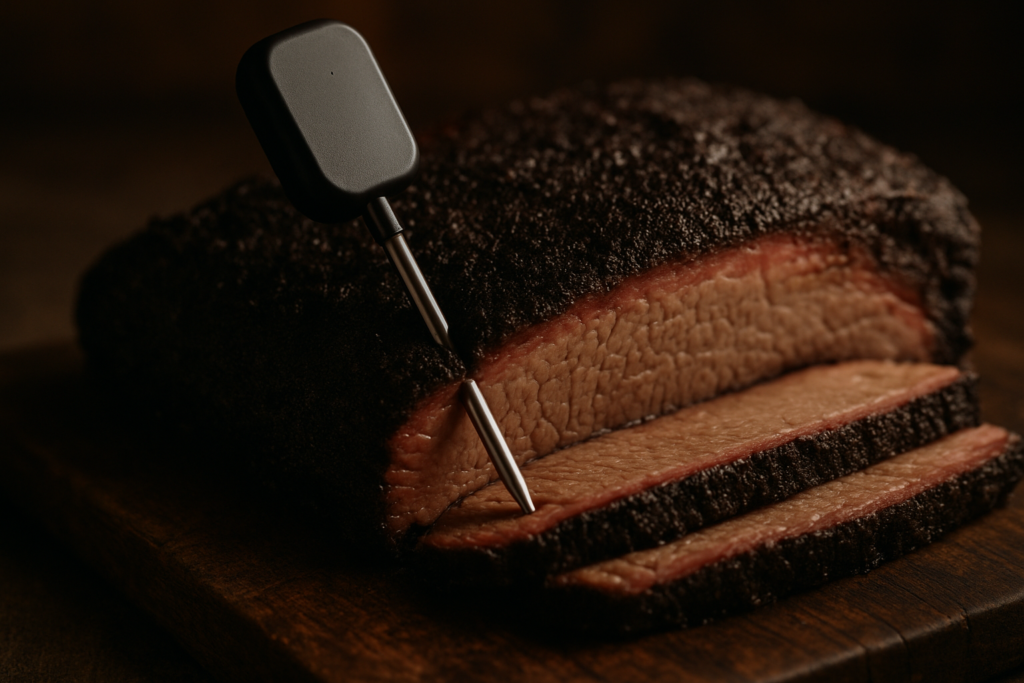
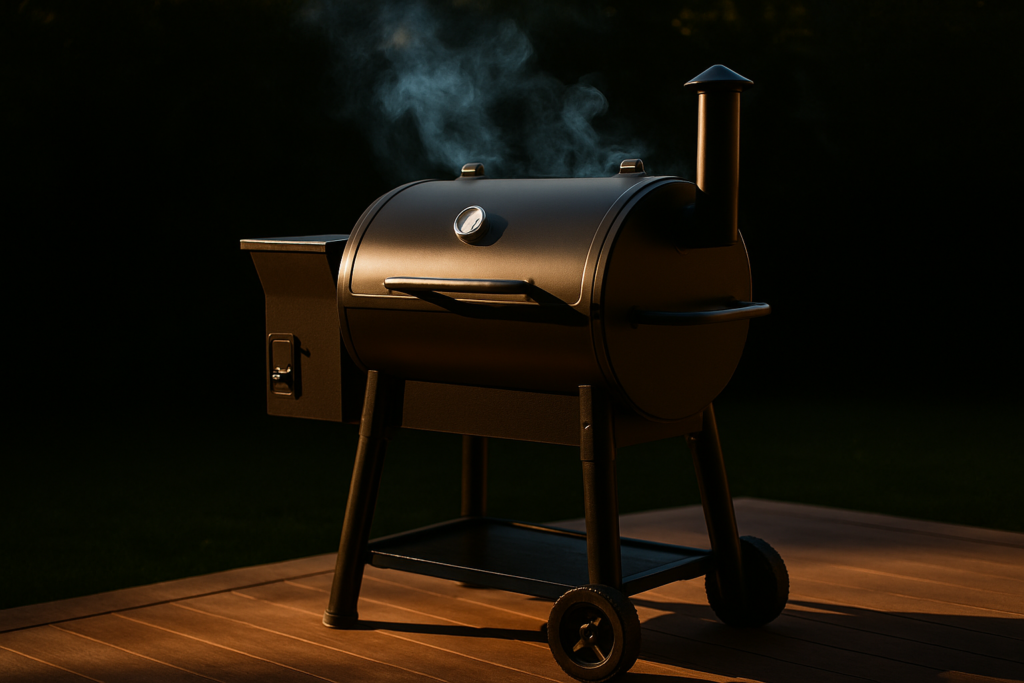
Complete Pellet Smoker Starter Kit on Amazon
Everything a first-time pellet smoker owner actually needs — grill, quality pellets, thermometer, cover, and essential tools — curated in one Amazon Idea List. Skip the trial-and-error phase.
The best pellet smoker in 2026 depends on how you actually cook.
If you spend Sunday afternoons chasing 200F brisket for 14 hours, the pick that wins is different from the one that wins if you mostly do weeknight chicken thighs and the occasional pork shoulder. This guide breaks down the five pellet grills we actually recommend in 2026, why each one is on the list, and how to figure out which is right for your backyard.
In this guide (jump ahead)
- What makes a great pellet smoker in 2026?
- 1. Best all-round: Traeger Ironwood XL
- 2. Best value: Camp Chef Woodwind Pro 24
- 3. Best premium: Yoder YS640s Competition Cart
- 4. Best budget: Pit Boss Pro Series Elite
- 5. Best portable: Traeger Ranger or Weber Smokey Mountain Traveler
- Head-to-head comparison
- The five questions to ask yourself before you buy
- Common pellet smoker mistakes to avoid
- The Prime Day angle
- Accessories that make a real difference
- Editor’s ranking
- What to read next
- Related PitPrimer guides
Disclosure: PitPrimer earns commission on qualifying purchases through Amazon Associates. Our picks are based on a review of manufacturer specifications, published editorial reviews, and community feedback from BBQ forums (r/smoking, r/BBQ, AmazingRibs, Smoking Meat Forums), cross-checked against real-world reports. We are independent of manufacturer relationships and disclose any exceptions on the relevant post.
- What makes a great pellet smoker in 2026?
- Best all-round: Traeger Ironwood XL
- Best value: Camp Chef Woodwind Pro 24
- Best premium: Yoder YS640s
- Best budget: Pit Boss Pro Series Elite
- Best portable: Traeger Ranger / Weber SM Traveler
- The five questions to ask before you buy
- Common pellet smoker mistakes
What makes a great pellet smoker in 2026?
Every pellet smoker on the market can do the basic job: hold temperature, burn wood pellets, put smoke on meat. The difference between a $400 smoker and a $2000 smoker shows up in five specific places:
See also: Traeger vs Recteq 2026: The Enthusiast Pellet Grill Head-to-Head (Which Ranks Higher?)
- Temperature accuracy and range. Cheap PID controllers swing plus-or-minus 25F. Premium controllers hold within 10F. Some units struggle to hold under 200F for low-and-slow; others cannot hit 500F for searing.
- Hopper capacity. A 12-hour brisket runs through 3-5 lb of pellets. Hoppers under 15 lb force you to refill mid-cook — a real consideration overnight.
- Build quality and gasket seal. A leaky lid wastes pellets, loses smoke, and shows up as inconsistent bark. Better smokers use thicker steel and proper gaskets.
- Direct-flame searing capability. Some smokers can pull the grate directly over the firepot for 700F sear temps; others are strictly indirect. Big difference for reverse-searing a steak.
- App and WiFi implementation. Every brand claims a great app. Only Traeger, Weber, and Camp Chef actually deliver in daily use. The rest range from mediocre to actively frustrating.
Fastest way to pick
- Best all-round: Traeger Ironwood XL — the smoker most home cooks should buy.
- Best value: Camp Chef Woodwind Pro 24 — sear box, huge cook area, half the price of Traeger flagship.
- Best premium: Yoder YS640s — competition-tier build quality, welded steel, 20-year lifespan.
- Best budget: Pit Boss Pro Series Elite — gets you smoking for under $600.
- Best portable: Traeger Ranger or Weber Smokey Mountain Traveler — tailgates, camping, small patios.
1. Best all-round: Traeger Ironwood XL
If you want us to pick one smoker for one household without knowing anything else, this is it. The Ironwood XL is the successor to the Ironwood 885 and represents Traeger’s best mix of performance, build quality, and app polish. Key numbers:
See also: Best Traeger Grills 2026: Pro Series, Ironwood, Timberline, and Ranger Full Lineup Guide
- 924 square inches of primary cooking area (enough for two whole briskets)
- Pop-and-lock precise D2 direct drive with induction fan, holds within 10F
- 22 lb hopper — enough for a 14+ hour cook without refill
- P.A.L. pop-and-lock accessory rail system for shelves, hooks, thermometer holders
- WiFIRE app control that actually works (Traeger has been iterating this app for a decade)
The weakness: it cannot direct-flame sear. Max grate temp is around 500F, fine for 90% of what you cook but not for steakhouse-tier sears. If you want to reverse-sear a ribeye, plan on finishing on a cast-iron skillet or an outdoor searing station.
- Traeger Ironwood XL
- Smart Grilling Control: WiFIRE technology lets you monitor and control the smoker from anywhere using the Traeger app. Adjust t…
- Wood-Fired Flavor: This wood pellet smoker grill uses all-natural hardwood pellets and Super Smoke Mode to deliver bold, authen…
- Versatile 6-in-1 Cooking: Grill, smoke, bake, roast, braise, and BBQ on one electric pellet smoker. With a temperature range of…
- Traeger Ironwood 885 (smaller alternative)
- Traeger Timberline XL (flagship, more `$)
- Versatile temperature range from 165°F to 500°F to smoke, bake, roast, and grill BBQ with precision
- 120V AC voltage and 1756 watts for quick heat-up and consistent temp control
- Intuitive touchscreen display and simple controls for easy use


2. Best value: Camp Chef Woodwind Pro 24

Camp Chef has been chipping away at Traeger’s mind share for three years and the Woodwind Pro is why. You get 811 square inches, PID controller with 10F accuracy, a real sear box that hits 700F for direct-flame searing, and Camp Chef’s Slide and Grill smoke-boost feature that lets you dial in low-and-slow smoke levels manually. All for roughly two-thirds of the price of a comparable Traeger.
See also: Best Camp Chef Grills 2026: Woodwind Pro, Apex, Sherpa, and Explorer Lineup Guide
What you give up: the app. Camp Chef’s connectivity is fine but the ecosystem does not have Traeger’s polish. If you plan to babysit cooks via app checks from the couch, Traeger still wins. If you spend most of your cook time actually outside near the smoker, Camp Chef is a legitimate steal.
- Camp Chef Woodwind Pro 24
- WIFI Smoker & Pellet Grill: This Camp Chef pellet grill lets you monitor and control cooking from your smartphone using Bluetoo…
- Premium Pellet Grill: Down & out ventilation gives you even heat and smoke throughout the entire chamber; grill features durabl…
- Camp Chef Pellet Grill: Download the app to set timers, receive notifications and monitor your food from anywhere with this smo…
- Camp Chef Woodwind Pro 36 (larger)
- Preseasoned Non-stick Griddle – Start cooking right out of the box with a factory-seasoned, non-stick griddle surface that deli…
- Hinged Lid – A built-in hinged lid provides wind protection while cooking and keeps your griddle shielded when not in use.
- Flamethrower Ignition – Light your flame fast with a powerful flamethrower ignition system—no matches, no stress.
- Camp Chef Apex 30 (dual-zone)
- WIFI Smoker & Pellet Grill: This Camp Chef pellet grill lets you monitor and control cooking from your smartphone using Bluetoo…
- Premium Pellet Grill: Down & out ventilation gives you even heat and smoke throughout the entire chamber; grill features durabl…
- Camp Chef Pellet Grill: Download the app to set timers, receive notifications and monitor your food from anywhere with this smo…


3. Best premium: Yoder YS640s Competition Cart
Kansas-built, welded steel, 10-gauge construction, 20-plus year expected lifespan. The Yoder is the pit that competition BBQ teams actually use. If you have a serious backyard smoking habit, plan to pass down your gear to your kids, and appreciate the difference between a well-built appliance and a mass-produced one, this is the pick.
Numbers: 1070 square inches, temperature range from 150F to 600F, second-shelf accessory that adds another 800 square inches. FireBoard PID controller with proper WiFi and app. Recirculating heat design for even cooking edge-to-edge without hot spots.
Downsides: heavy (325+ lb), expensive ($2000+), and the wait time can be weeks. If you buy a Yoder you are making a decade-long commitment. Which is exactly the point.
- Yoder YS640s Competition Cart
- ð¥【Wide Compatibility】Grill Cover for Yoder Smokers YS640s Competition Cart. Designed to fit many grill styles and sizes, thi…
- ð¥【Heavy Duty Material】Made with durable Oxford fabric, this heavy duty grill cover features reinforced stitching and a wear-…
- ð¥【Secure Fit Design】This bbq grill cover includes an adjustable drawstring design to help keep the cover in place during win…
- Yoder YS480s (smaller)
- ✅【Bristle-Free Cleaning】Bristle Free Grill Brush for Yoder Smokers YS480s Pellet Grill. This bristle free grill brush helps cle…
- ✅【350 RPM Motorized Power】Built with a 7.4V lithium-powered motor, this spinning grill brush reaches up to 350 RPM for efficien…
- ✅【Cordless & Rechargeable】Designed with a 4000mAh rechargeable battery, this cordless grill brush supports longer cleaning sess…
- Yoder YS1500s (huge)
- ð¥【Compatibility】Grill Cover for Yoder YS1500s Pellet Grill 2020-2026. The tailored shape helps provide better coverage while…
- ð¦ 【Designed for Outdoor Conditions】Made from durable fabric selected for regular outdoor use. The material helps reduce the…
- ☀️ 【Designed for Regular Outdoor Use】Constructed with sturdy outdoor fabric designed for changing seasonal conditions. The mate…


4. Best budget: Pit Boss Pro Series Elite
Under $600 and it works. Pit Boss gets a bad rap in enthusiast circles for build quality quirks (standard-gauge steel, gasket issues on older models), but the Pro Series Elite line has fixed most of that. You get 850+ square inches, a genuine PID controller (not the cheap fixed-differential kind), 24 lb hopper, and enough cook area for a family of four for years.
What you give up: precision. The Pit Boss holds temperature within roughly 15F where a Traeger holds within 10F. On a 12-hour brisket, that difference matters. For weeknight chicken thighs and Sunday pork shoulders, it does not.
- Pit Boss Pro Series Elite
- 【Designed for Pit Boss Elite 6-Series】- Specifically designed to fit the Pit Boss Pro Series Elite 6-Series vertical pellet smo…
- 【Black Gloss Porcelain-Enamel Finish】- Finished with a durable black porcelain-enamel coating, these cooking grill grate resist…
- 【Full-Size Grill Grate for Vertical Smoking Space】- The 22.2” × 13” grate size helps maximize usable cooking area inside the sm…
- Pit Boss Sportsman 820
- 【Wood Pellet Grill Cover Size & Compatibility】This GuardKove pellet grill cover measures 56″W x 27″D x 50″H, Compatible with Pi…
- 【Upgraded 1000D Thickened Fabric – Tear Resistance Improved by 200%】The GuardKove smoker grill cover is made of upgraded 1000D…
- 【100% Waterproof Structure – Prevents Rust and Water Accumulation】Our barbecue grill cover features a triple protection system…
- Pit Boss Navigator 850
- EVEN HEAT: The Pit Boss Pellet Grill features fan-forced convection that ensures consistent indirect heat
- PEACE OF MIND INCLUDED: The Pit Boss Grills are backed by a 5 year warranty so you can cook with confidence season after season
- EXTENDED CAPACITY: Pit Boss pellet smoker has 30 lb hopper with built-in viewing window to keep an eye on fuel levels


5. Best portable: Traeger Ranger or Weber Smokey Mountain Traveler
Two very different portable options. The Traeger Ranger is a genuine pellet smoker in a compact tabletop form factor — 176 square inches, 8 lb hopper, standard 120V power. Great for tailgates, small patios, or campgrounds with power. About $400.
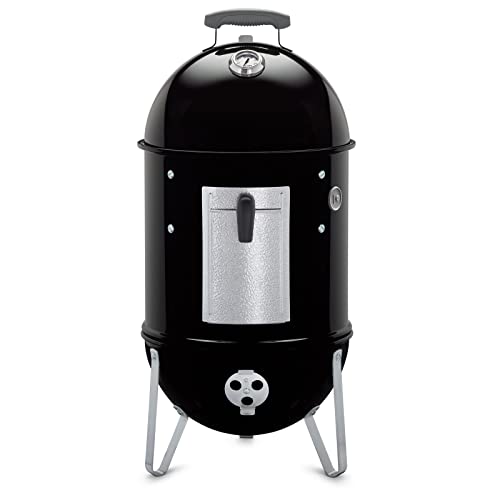
The Weber Smokey Mountain Traveler is not a pellet smoker but is a legitimate charcoal alternative worth mentioning here — a 14-inch Weber Smokey Mountain in a folding travel-friendly package. If your “portable” scenarios include remote sites without power, charcoal is the right tool.
- Traeger Ranger portable pellet grill
- Digital Arc Controller for Precise Cooking – The Traeger Ranger portable pellet grill features a Digital Arc Controller for acc…
- Advanced Grilling Logic Ensures Consistent Heat – Enjoy perfectly cooked meals every time with the Advanced Grilling Logic syst…
- Easy-to-Clean Porcelain-Coated Grates & Cast Iron Griddle – Comes with a separate cast iron griddle and porcelain-coated grill…
- Green Mountain Grills Trek (portable alternative)
- UPGRADED FROM THE FAN-FAVORITE DAVEY CROCKETT: The GMG Trek Prime 2.0 builds on the beloved Davy Crockett model with sturdier l…
- SERIOUS COOKING CAPACITY: The 17.25″ × 12.5″ grate comfortably fits 1-2 Boston butts, full briskets, or whole turkeys. With a t…
- WIFI CONTROL FROM YOUR PHONE: The built-in digital WiFi controller pairs with a free iOS or Android app, letting you monitor an…
- Weber Smokey Mountain 14″ (portable charcoal)
- Porcelain-enameled lid, bowl, and center section retain heat and won’t rust or peel
- Two cooking grates provide ample room for smoking two large items at once
- Silicone temperature grommet monitors the internal temperature of your smoker


Head-to-head comparison
| Model | Cook area | Hopper | Direct sear? | Approx price |
|---|---|---|---|---|
| Traeger Ironwood XL | 924 sq in | 22 lb | No | $1,500 |
| Camp Chef Woodwind Pro 24 | 811 sq in | 22 lb | Yes (sear box) | $900 |
| Yoder YS640s | 1070 sq in | 20 lb | Yes (grate-lower) | $2,300 |
| Pit Boss Pro Series Elite | 850 sq in | 24 lb | Yes (slide plate) | $550 |
| Traeger Ranger (portable) | 176 sq in | 8 lb | No | $400 |
The five questions to ask yourself before you buy
- How much do you cook at once? A family of four rarely needs more than 700 square inches. A neighbourhood-party host wants 1000+.
- How often will you do all-nighters? If overnight brisket cooks are the point, hopper capacity matters more than any other spec. Under 15 lb and you are getting up at 3 a.m. to refill.
- Do you want to sear or reverse-sear on the smoker itself? If yes, Camp Chef Woodwind Pro or Pit Boss with slide-plate. If not, save the money.
- How much do you care about the app? If “check my brisket from bed” is the fantasy, Traeger’s app is the best. Camp Chef and Weber SmokeFire are next. Everyone else is a functional-tier option.
- Do you plan to pass this down to your kids? If yes, buy a Yoder or a Weber SmokeFire EX6 and stop looking at spec sheets. Everything else is a 5-10 year appliance.
Common pellet smoker mistakes to avoid
- Buying a smoker with a small hopper because “I’ll just refill it.” You will. At 3 a.m. In February. On the coldest night of the year. Get the big hopper.
- Assuming cheaper pellets are fine. The cheapest pellets contain binder wood (usually oak or alder) and less flavour wood. For a 12-hour smoke, spend the extra $3 for a proper hardwood blend.
- Not calibrating the built-in temperature probe. Every pellet smoker probe drifts. Verify against a reliable meat thermometer before you trust it.
- Skipping the cover. Sun and rain eat pellet smokers alive. Get a fitted cover from the manufacturer or a heavy-duty aftermarket brand.
- Believing “500F sears steak.” Real steakhouse sears need 700F+. Any smoker that lists 500F max grate temp is a smoker, not a sear station.
The Prime Day angle
Pellet smokers are one of the most heavily discounted categories during Amazon Prime Day (July 8-11 in 2026). Historical patterns:
- Traeger Ironwood 885 and Ironwood XL: 15-25% off
- Pit Boss flagship models: 20-35% off
- Camp Chef Woodwind Pro: 10-20% off
- Yoder: rarely discounts. Full price is full price.
If you were planning to buy anyway, watch for the Prime Day window. If you were not, do not buy just because it is on sale.
Accessories that make a real difference
Whatever smoker you pick, three accessories transform the experience from beginner to genuinely-good backyard cook:
- A dedicated meat thermometer (we cover picks in a separate guide) — the smoker’s built-in probe is not accurate enough for the meat itself. Use it for grate temp only.
- A pellet-agnostic cover — extends the life of the smoker by years.
- Fireproof pellet storage — airtight containers keep pellets dry and burn-consistent.
- ThermoWorks Signals meat thermometer
- Monitor Multiple Temps at Once: Track up to four channels — meat, pit, or both — on one clear display.
- Powerful App Control and Tracking: The ThermoWorks App lets you monitor, graph, and manage all four probes remotely with custom…
- Stay Connected Anywhere: Wi-Fi and Bluetooth send live temperature data and alerts to your phone or tablet.
- MEATER Plus wireless thermometer
- Truly Wireless Food & Meat Thermometer: 100% wire-free, the MEATER Plus gives you complete flexibility and freedom in your cook…
- Freedom to Cook Anywhere: With a built-in Bluetooth repeater in the charger, MEATER Plus extends wireless range, allowing you t…
- Dual Sensor Accuracy: Equipped with dual temperature sensors, it monitors both internal meat temperature (up to 212°F) and ambi…
- Traeger Ironwood XL cover
- 【Pellet Grill Cover Dimension】Kipiea smoker grill cover for Traeger size measures: 70″W x 22″D x 44″H for Traeger Ironwood XL &…
- 【100% Waterproof Protection】Want to protect your valuable pellet grill from the elements with the highest quality outdoor grill…
- 【Heavy-Duty, UV & Tear Resistant】Our wood pellet grill cover for outdoor grill is made from high-density 208 GSM 600D Oxford fa…
- Airtight pellet storage container (40 lb)
- MADE IN THE USA & BPA-FREE: Quality you can trust. This heavy-duty storage bin is manufactured in America using food-safe, non-…
- 40LB HIGH CAPACITY DISPENSER: Designed to hold a full 40-pound bag of wood pellets, charcoal briquettes, or potting soil. The s…
- WEATHERPROOF GASKET SEAL: Features a reinforced locking lid with a rubber gasket to lock out moisture, pests, and ants. Ideal f…


Editor’s ranking
If we had to spend our own money on a pellet smoker today, our editorial pick is the Traeger Ironwood XL at ~$1500. It is what most backyard cooks should own: enough cook area for a big weekend, hopper capacity for overnight cooks, and an app polished enough to make babysitting a brisket at 2 a.m. a bearable experience.
Second choice, if the budget is tight: Camp Chef Woodwind Pro 24 at ~$900. You give up nothing important, gain a sear box, and save $600.
Third choice, if you know you want the last smoker you will ever buy: Yoder YS640s. Welded steel, competition-tier, and it will outlive at least two generations of Traegers.
Fourth choice, if you just want to start smoking under $600: Pit Boss Pro Series Elite. Gets you cooking, teaches you the fundamentals, and you can upgrade in three years without regret.
Whichever you pick: get a proper meat thermometer, buy the manufacturer cover, and store your pellets in an airtight container. And run one brisket in your first month so you actually learn the machine.
What to read next
- Best Meat Thermometer for BBQ 2026 (coming soon)
- Traeger vs Weber SmokeFire vs Pit Boss: Head-to-Head (coming soon)
- Best Wood Pellets by Wood Type (coming soon)
- How to Smoke Brisket: First-Timer Guide (coming soon)
About this guide
Our recommendations synthesize manufacturer specifications, published editorial reviews (AmazingRibs, Wirecutter, Serious Eats, Meathead), and community feedback from BBQ forums (r/smoking, r/BBQ, Smoking Meat Forums), cross-checked against real-world reports. We do not accept payment for recommendations. Where a product is covered by an active brand campaign, we disclose that in the post; otherwise all recommendations are independent of manufacturer relationships.
Last reviewed: July 2026
Related PitPrimer guides
- Traeger vs Weber SmokeFire vs Pit Boss: 2026 Pellet Grill Head-to-Head (Which One Ranks Higher?)
- Weber SmokeFire EX6 vs Traeger Ironwood XL vs Pit Boss Pro Series 850 Compared 2026
- Yoder YS640s vs Recteq RT-700 vs Camp Chef Apex Compared 2026: Enthusiast Pellet Grills Head-to-Head
- Blackstone vs Camp Chef vs Pit Boss Griddles 2026: 28-inch Class Head-to-Head
Frequently asked questions
How were these products selected?
This guide is a research-based synthesis of product specs, brand reputation, current Amazon reviews, and category trends. It is not a hands-on review – use it to narrow options before you buy.
What price range should I expect?
Prices vary significantly across the categories above. Entry options start at the lower end of each tier listed, while premium picks can be several times more. Amazon pricing changes frequently, so confirm current numbers on the product listings.
Should I always buy the most expensive option?
Not necessarily. Premium products offer better materials, longer warranties, and higher-end features, but mid-tier picks meet the needs of most buyers. Match the pick to your actual use case rather than defaulting to the top of the price range.
How often is this guide updated?
This guide is refreshed as new products launch and older picks are discontinued. Amazon pricing and stock change daily – always confirm current price and availability on Amazon before purchase.
Where is the best place to buy?
Amazon is linked throughout this guide because it typically has broad selection, current pricing, and standardized return policies. Direct manufacturer sites and specialty retailers are also options depending on category and preference.
Related BBQ guides
Shop the Amazon Storefront
Every pellet smoker, grill, and BBQ accessory recommendation – curated in one Amazon Storefront.
Try Amazon Prime free for 30 days – fast pellet and BBQ ingredient delivery
As an Amazon Associate and Amazon Influencer, we earn from qualifying purchases at no extra cost to you.