Complete Pellet Smoker Starter Kit on Amazon
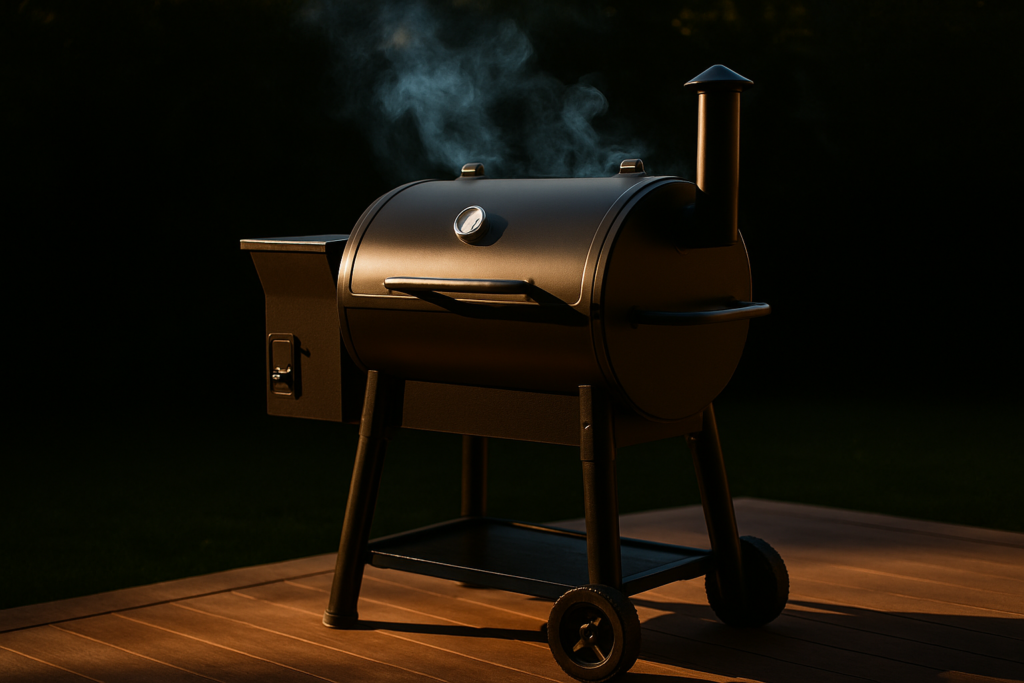
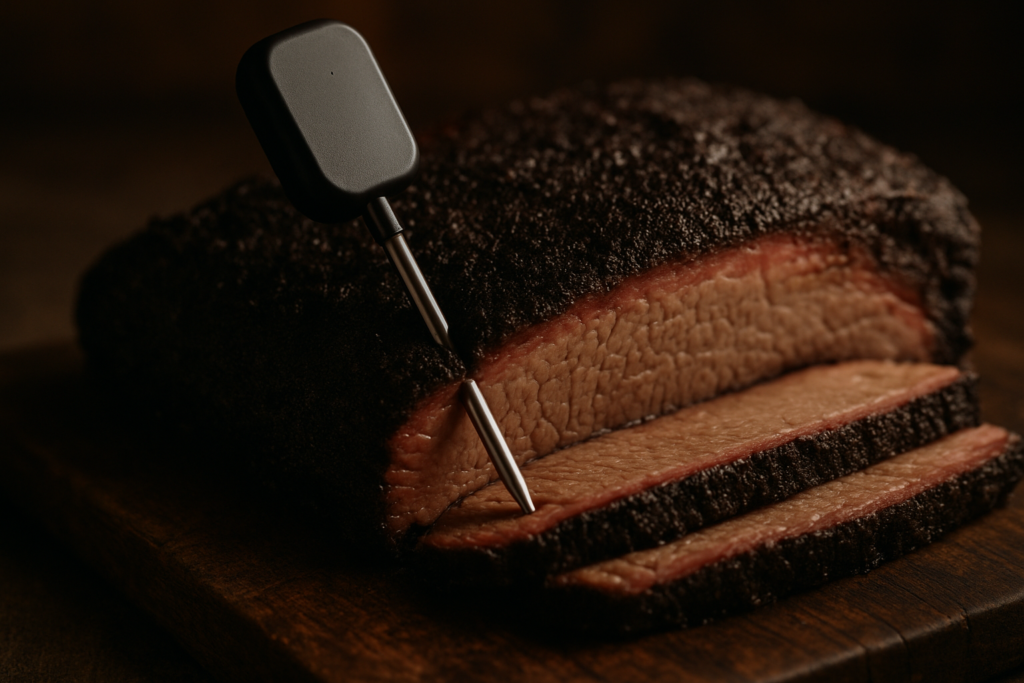
Everything a first-time pellet smoker owner actually needs — grill, quality pellets, thermometer, cover, and essential tools — curated in one Amazon Idea List. Skip the trial-and-error phase.
The cheapest pellets on Amazon are 60 percent oak filler.
Pellet wood makes a real difference in the taste of your food, but the pellet industry has spent 15 years teaching customers that “hickory” means “40 percent hickory plus 60 percent generic hardwood.” This guide covers what each wood actually tastes like, which brands actually deliver 100 percent single-wood pellets, and which wood to pair with which meat.
In this guide (jump ahead)
- Why pellet quality matters
- The six main pellet woods (and what they actually taste like)
- Blends: what to buy and when
- Wood pairing chart
- Storage: keep pellets dry or throw them out
- Buying volume: 20 lb vs 40 lb vs bulk
- What to skip in this category
- Related PitPrimer guides
- Editor’s ranking
- Related PitPrimer guides
Disclosure: PitPrimer earns commission on qualifying purchases through Amazon Associates.
Why pellet quality matters
Three things separate premium pellets from generic hardware store pellets:
See also: Traeger vs Recteq 2026: The Enthusiast Pellet Grill Head-to-Head (Which Ranks Higher?)
- Wood purity. A bag labelled “hickory” may be 30-40 percent hickory blended with oak or alder filler. Premium bags labelled “100 percent hickory” contain only hickory sawdust from the primary furniture and construction industry.
- Moisture content. Fresh pellets have moisture at 8-10 percent. Poorly stored or old pellets absorb up to 25 percent moisture, which produces dirty smoke, jams the auger, and burns inconsistently.
- Binders and additives. Premium pellets use only heat and pressure to form (natural wood lignin acts as the binder). Some cheaper bags use added binders that produce off flavours or excess ash.
Fastest way to pick
- Best all-round bag: Traeger Signature Blend (hickory, maple, cherry) – safe pick for any meat
- Best for beef and brisket: Bear Mountain Gourmet Oak or Lumber Jack 100% Hickory
- Best for pork: Lumber Jack 100% Apple or apple-cherry blend
- Best for poultry: Traeger Cherry or CookinPellets 100% Perfect Mix (cherry-heavy)
- Best for fish and seafood: alder or apple – gentle woods
- Best budget bulk buy: Camp Chef Competition Blend at Costco or Sam\’s Club warehouse pricing
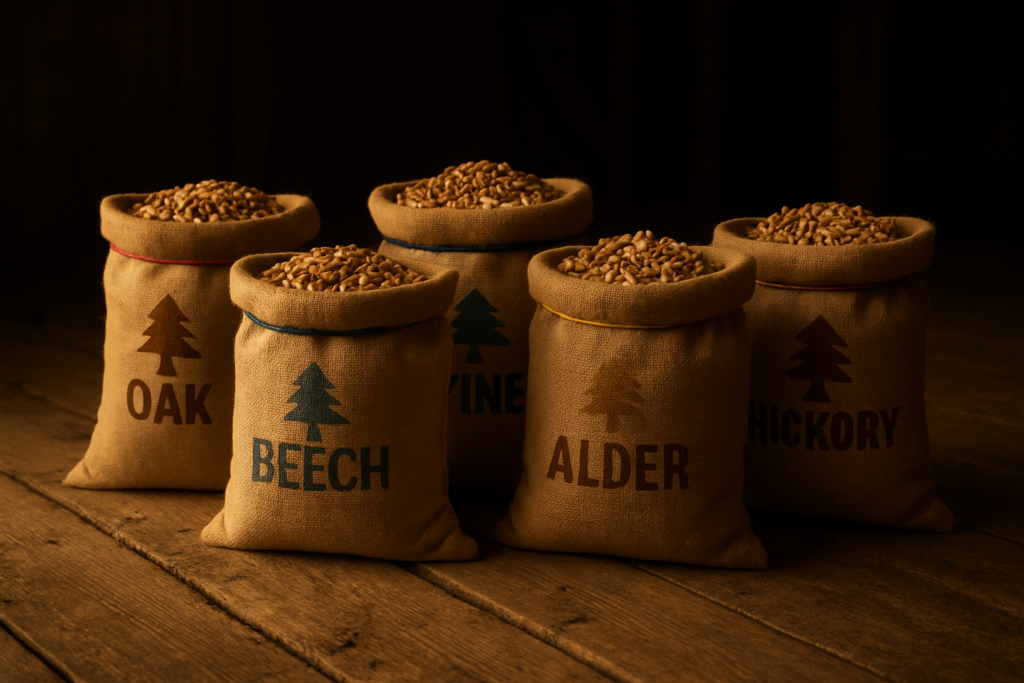
The six main pellet woods (and what they actually taste like)
Hickory – the classic BBQ wood
Strong, bold, bacon-like smoke flavour. Slightly bitter if used alone for a long cook. This is what most people think of when they think “BBQ” – it is the dominant wood in Kansas City and Memphis styles.
Best pairings: beef ribs, brisket (with oak), pork shoulder, bacon, whole ham, sausage, mac and cheese.
Overuse warning: hickory alone for 12+ hours can turn bitter. Blend with oak, cherry, or apple.
- Lumber Jack 100% Hickory (20 lb)
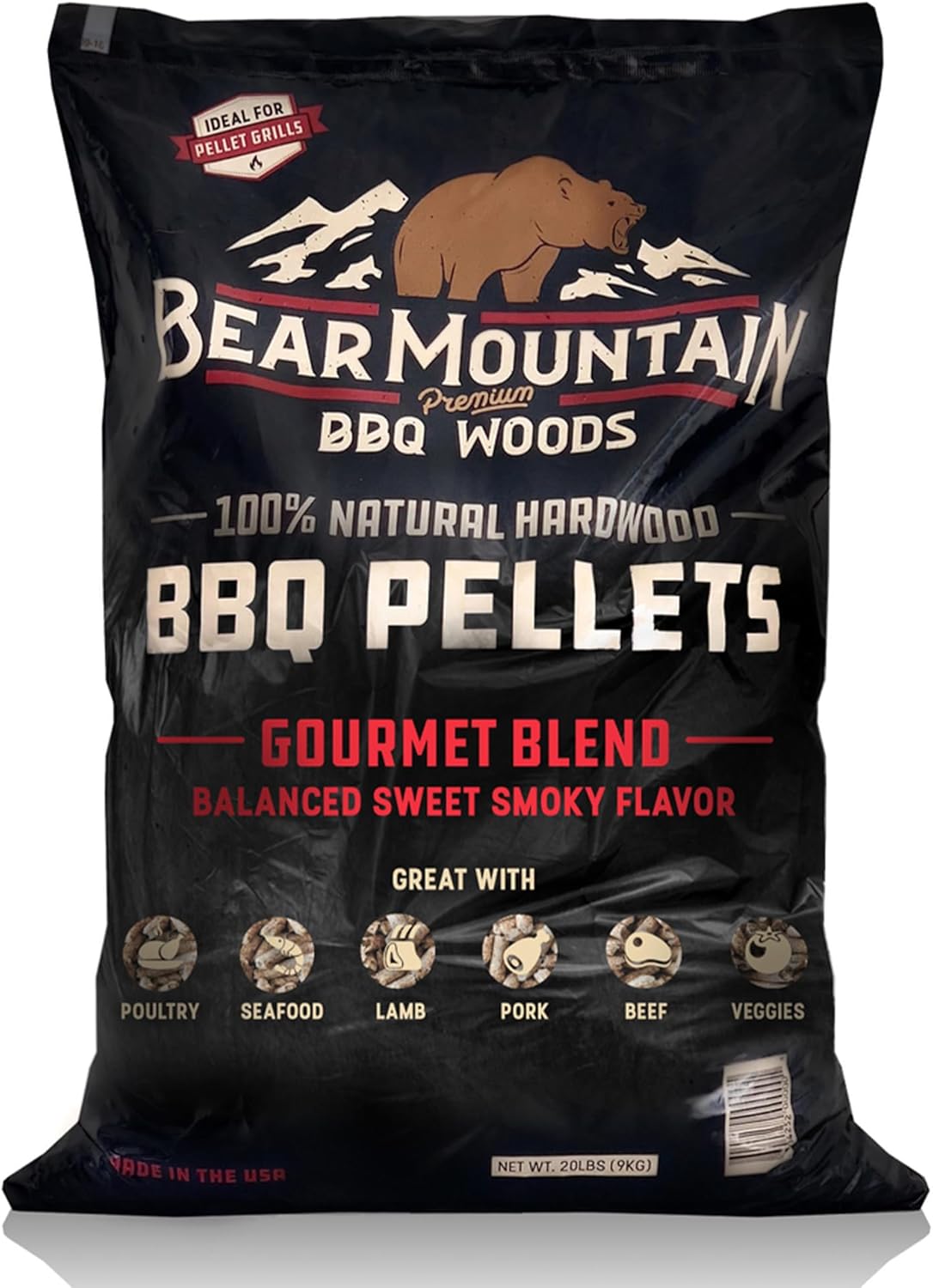
- Bear Mountain Hickory
- Hickory Barbecue Flavor: Hickory pellets impart well balanced robust, smoky flavor, enhancing grilled or smoked food with delic…
- All Natural Hardwoods: Natural hickory BBQ flavor adds a robust, tasty finish to red meats, poultry, or vegetable dishes, enhan…
- Low Moisture: Crafted from 100 percent all natural hardwoods, our product ensures exceptional purity, delivering authentic arom…
- CookinPellets Hickory (40 lb bulk)
- Add a good, smokey flavor to your BBQ with these 100-percent natural hardwood smoking pellets; Quantity: 2
- Mix of the 4 most popular hardwood pellets only: hickory, cherry, hard maple, and applewood; Pellets are 100 percent of what we…
- Pellets crafted from 100% all-natural hardwood with no additives, fillers, or binders; Provides clean and consistent burn, ensu…


Oak – the workhorse background wood
Medium smoke intensity, mild and neutral in flavour. Oak is the base wood in most Texas-style brisket cooks – a good smoke without being aggressive. Pairs well with any other wood.
Best pairings: Texas-style brisket, beef ribs, chicken, lamb, blends with any wood.
Underrated: oak is the wood that lets other flavours come through. If you want the meat and rub to shine, oak is the correct base.
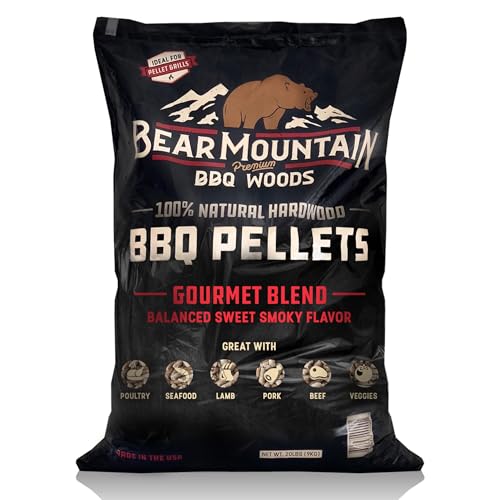
- Bear Mountain Gourmet Oak
- Gourmet Blend BBQ Flavor: Take your grilling to another level by using this pack of Gourmet blend wood pellets which provides a…
- Low Moisture: Enhance your grilling flavor with these smoker pellets that are low in moisture content which guarantees a clean…
- Well-Balanced Flavor: All Natural BBQ pellets add a sweet flavor to your favorite grilled dishes
- Lumber Jack Oak-Hickory Blend
- Maple-Hickory-Cherry Blend (1/3 Maple, 1/3 Hickory, 1/3 Cherry) – Blend MHC Competition
- Maple-Hickory-Cherry Blend (1/3 Maple, 1/3 Hickory, 1/3 Cherry) – Blend MHC Competition
- Works great in Pellet Grills, Tube Smokers and the Smokin Wedgie
- CookinPellets Post Oak
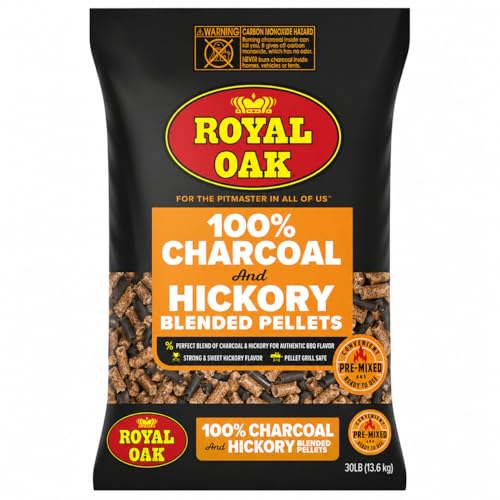
- Combines authentic BBQ flavor with sweet, smoky hickory hardwood, trusted by professional pitmasters and backyard pros
- Conveniently pre-mixed and ready to use
- Perfect for everything from low-and-slow briskets to flame-seared steaks; the ultimate mix for flavor and versatility

Mesquite – the intense Texas wood
Very strong smoke, distinctive, borderline aggressive. Traditional in South Texas BBQ. Use sparingly – a full bag of mesquite for a whole brisket will be too intense for most palates.
Best pairings: beef fajitas, cowboy steaks, short-cook chicken. Blend at 25-33 percent maximum in longer cooks.
Warning: mesquite is the pellet wood most-often described as “creosote-y” if overused. Not a starter wood.
- Lumber Jack Mesquite
- Bear Mountain Mesquite
- Heavy-duty footlocker storage tote provides ample space for storing your personal items
- Provides ample storage space, ideal for packing and moving to dorm rooms or shared living spaces, allowing you to keep personal…
- Transports easily featuring smooth-rolling wheels and ergonomic handles that make even the heaviest of loads hassle-free
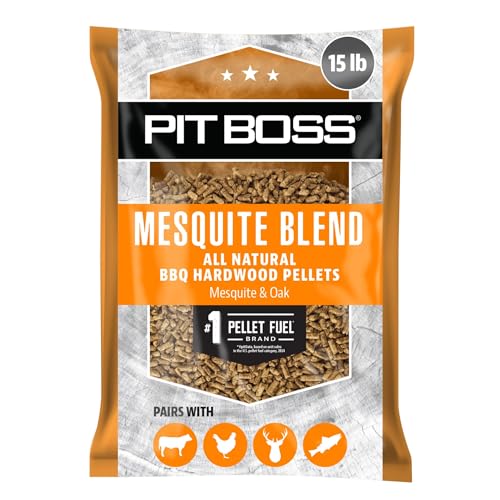
- Pit Boss Mesquite
- THE #1 PELLET FUEL BRAND: Trusted by backyard grillers and pitmasters alike, Pit Boss Hardwood BBQ Pellets deliver premium qual…
- 100% ALL NATURAL HARDWOOD: Made from premium North American hardwood with 0% artificial additives, fillers, glues, binders, che…
- AUTHENTIC WOOD-FIRED FLAVOR: Mesquite Blend delivers bold, earthy smoke with deep, robust flavor that enhances brisket, steaks,…

Apple – the sweet, mild pork wood
Mild sweet fruit-wood smoke. Excellent for pork, chicken, and poultry. Very forgiving – hard to overuse. If you are unsure what wood to use, apple is often the right answer.
Best pairings: pork shoulder, ribs, chicken, turkey, quail, salmon, cheese.
Family friendly: the mildest of the popular smoking woods. Kids and picky eaters tolerate apple-smoked meats.
- Lumber Jack Apple (100%)
- Traeger Apple
- APPLE WOOD FIRED FLAVOR: With Traeger Apple Hardwood Pellets, naturally enhance baked goods, chicken, and pork with a subtly sw…
- NOT ALL PELLETS ARE CREATED EQUAL: The best wood-fired grill on the market demands the best wood pellets on the market. Real ta…
- TRAEGER HAS SPENT YEARS DEVELOPING THE PERFECT PELLET: Our hardwood’s unique compact cell structure results in a balanced, depe…
- Bear Mountain Apple
- Apple Wood Flavor: Take your grilling to another level by using this pack of apple wood pellets which provides a sweet, tasty f…
- All Natural Hardwoods: Charcoal pellets are made from 100-percent all-natural hardwoods with no flavorings, fillers, or additiv…
- Low Moisture: Enhance your grilling flavor with these smoker pellets that are low in moisture content which guarantees a clean…


Cherry – the sweet, colour-boosting wood
Sweet, mild, slightly fruity. Cherry produces the most attractive mahogany bark colour of any smoking wood. Pairs with almost anything and adds visual appeal.
Best pairings: pork ribs, brisket (blended with oak), chicken thighs, duck, salmon, cheese.
Signature use: professional pit teams often add 25 percent cherry to their base wood for the colour it produces on the bark.
- Traeger Cherry
- KINGSFORD CRAFTSMOKE PREMIUM WOOD PELLETS: Introducing Craftsmoke, the premium line of natural hardwood pellets, crafted in sma…
- SIGNATURE SMOKEY PROFILE: Delivers a balanced smoke flavor that enhances without overpowering, ideal for smoking meat and delic…
- 100% NATURAL HARDWOOD PELLETS: Savor the balanced smoke flavor of a hickory, cherry and oak blend, with no fillers, no oils and…
- Lumber Jack 100% Cherry
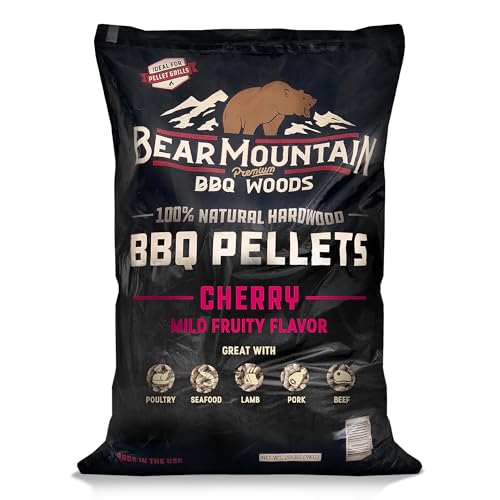
- Bear Mountain Cherry
- Cherry BBQ Flavor: Take your grilling to another level by using this pack of cherry smoker wood pellets which provides a fruity…
- Low Moisture: Enhance your grilling flavor with these smoker pellets that are low in moisture content which guarantees a clean…
- Well-Balanced Flavor: All Natural Cherry BBQ pellets add a well-balanced flavor to your favorite dishes like grilled dishes lik…

Pecan – the balanced middle-of-the-road wood
Medium intensity, nutty, slightly sweet. Falls between apple (mild) and hickory (strong). Great for poultry and pork, works for beef.
Best pairings: turkey, chicken, pork shoulder, ribs, sausage, nut-based rubs.
Underrated: pecan is popular in Texas and Louisiana but less well-known elsewhere. Try it as an alternative to hickory when you want less intensity.
- Lumber Jack Pecan
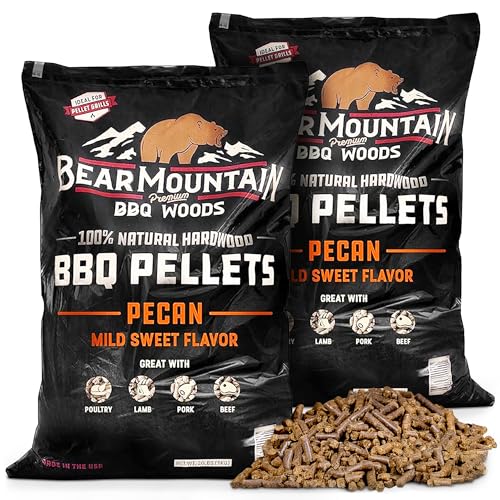
- Bear Mountain Pecan
- Pecan BBQ Pellets: Pack of 2 pecan pellets deliver a mild sweet smoky flavor with a mouth-watering depth that enhances poultry…
- Pairs Well With: Perfect for poultry and veggies, but also great with any cut of meat or fish to give everyone at the bbq the f…
- All Natural: The perfect blend of 100% premium, all-natural hardwoods has no flavorings, fillers, or additives
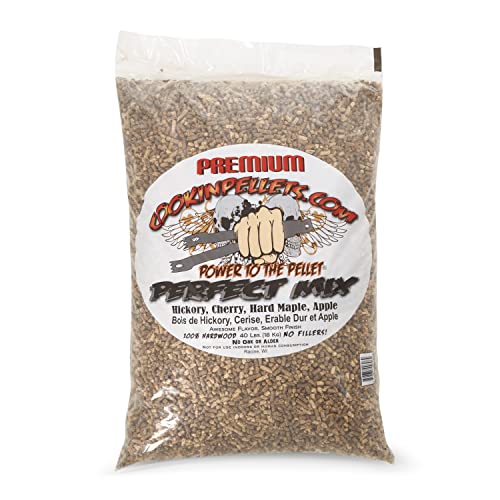
- CookinPellets Perfect Mix (pecan-heavy)
- Natural Hardwood Pellets: Premium quality pellets for smoker grill are crafted to infuse your BBQ dishes with an authentic, mou…
- Perfect Mix: Exclusive mix of the 4 most popular hardwood pellets like hickory, cherry, hard maple, and applewood, enhancing th…
- Rich & Smoky: Cooking pellets contain only a natural hardwood blend famous for its rich smoky flavor, adding a taste to meats,…
Blends: what to buy and when
Pre-made blends are the practical answer for most home cooks. Buying one big bag of a good blend beats stocking six single-wood bags for occasional use.
See also: Best Father’s Day Grills and BBQ Gifts 2026: The Complete Gift Guide (Any Budget)
Best all-round blend: Traeger Signature Blend
Hickory + maple + cherry. Sold everywhere Traeger products are sold. Neutral enough for anything, flavorful enough to matter. Safe first bag.
- Traeger Signature Blend (20 lb)
- SIGNATURE BLEND WOOD FIRED FLAVOR: The flavors of hickory, maple, and cherry hardwoods combine for in our Traeger Signature Ble…
- NOT ALL PELLETS ARE CREATED EQUAL: The best wood-fired grill on the market demands the best wood pellets on the market. Real ta…
- TRAEGER HAS SPENT YEARS DEVELOPING THE PERFECT PELLET: Our hardwood’s unique compact cell structure results in a balanced, depe…

Best competition blend: CookinPellets Perfect Mix
Hickory, cherry, hard maple, apple. No binder wood. Balance leans toward assertive smoke. Popular with competitive teams.
Best value blend: Camp Chef Competition Blend
Maple, hickory, cherry. Sold at Costco and Sam\’s Club in 20 lb bags for competitive prices. Good baseline for anyone burning through pellets regularly.
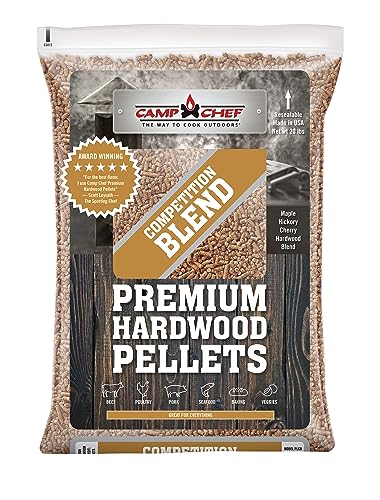
- Camp Chef Competition Blend
- Maple, Hickory, and Cherry Blend: Competition blend is the Jack of All Trades. It’s great with poultry, pork, baking, veggies,…
- No Oils, Chemicals, or Binders Added: No oils, chemicals or binders added mean better flavor and a more efficient burn.
- Kiln-Dried: The kiln dried process creates low moisture content for a very dry, hot burning pellet. This means it burns less to…
Wood pairing chart
| Meat | Best wood | Good alt | Avoid |
|---|---|---|---|
| Brisket (Texas) | Post oak | Oak + cherry blend | Straight mesquite (bitter over 12+ hrs) |
| Beef ribs | Hickory | Pecan or oak | Apple (too mild) |
| Pork shoulder | Apple + cherry | Hickory + apple | Mesquite (overpowers) |
| Pork ribs | Cherry | Apple, pecan | Straight hickory (bitter over 6+ hrs) |
| Chicken and turkey | Apple or pecan | Cherry, oak | Mesquite (too strong) |
| Salmon and fish | Alder | Apple, cherry | Hickory, mesquite |
| Sausage and bacon | Hickory | Applewood, cherry | None really |
| Cheese (cold smoke) | Cherry, apple | Alder | Hickory, mesquite |
Storage: keep pellets dry or throw them out
Wet pellets ruin cooks. Pellets absorb humidity aggressively from open bags in humid summers or during winter freeze-thaw cycles. Signs of moisture damage:
See also: Best Outdoor Fire Table for Backyard 2026: Propane, Wood-Burning, and Smokeless Fire Pit Picks
- Pellets crumble under thumb pressure (should be hard, stay intact)
- Sawdust at the bottom of the bag
- Musty smell when opening
- Auger jams during use
- Dirty white smoke instead of thin blue smoke
Fix: proper storage from day one. An airtight 40 lb container in the garage or shed keeps opened bags dry through humid seasons.
- Airtight pellet storage (40 lb capacity)
- VERSATILE STORAGE BIN: Ideal for dry food storage for cats, dogs, birds, and other pets. This pet food storage container holds…
- SECURE AND FRESH: Airtight seals and snap-lock latches ensure that your pet’s food stays fresh by keeping out moisture and humi…
- EASY MOBILITY: Includes attachable wheels, allowing you to move the storage bin effortlessly. Place it on a shelf or roll it fr…
- Traeger pellet tote (20 lb)
- Keeps Pellets Dry and Fresh for Optimal Performance – The Traeger Stay Dry Pellet Bin is designed to keep your wood pellets dry…
- Space-Saving Stackable Design – The Traeger pellet bin features a stackable design, making it ideal for saving space in your ou…
- Airtight Lid with Locking Closure – Equipped with a locking airtight lid, this pellet storage bin ensures your pellets remain m…
- Gamma Seal Lid + 5-gal bucket (DIY)
- SMART FUNCTIONAL DESIGN: Turn any standard utility bucket into a sealed storage container. Great for storing everything from bi…
- SAY GOODBYE TO PESKY PESTS: In addition to locking in scents, Gamma Seal Technology keeps ants and other pests out of standard…
- FOOD-SAFE AND BPA-FREE: The Gamma Seal utility lid is made from food-grade, durable, BPA-free HDPE plastic. While it is suitabl…


Buying volume: 20 lb vs 40 lb vs bulk
Cost per pound drops fast at bulk. Typical prices in 2026:
- 20 lb bag at Amazon or a grocery store: $0.90-1.20 per lb
- 40 lb bulk bag (CookinPellets): $0.75-0.90 per lb
- Costco or Sam\’s Club 20 lb Camp Chef: $0.65-0.80 per lb
- Direct-from-manufacturer bulk (Bear Mountain, Lumber Jack pallet quantities): $0.60-0.70 per lb
Rule of thumb: if you burn through more than 40 lb of pellets per month, buy bulk. If you cook casually (2-3 times per month), 20 lb bags are fine.
Storage matters more than any price difference. A bulk 40 lb bag that gets rained on wastes more money than the savings.
What to skip in this category
- Hardware store “hardwood blend” without stated wood breakdown. Usually 60 percent oak filler, 40 percent flavour wood. Smokes fine but does not deliver the advertised flavour.
- Pellets with added binders or flavourings. Real pellets contain only wood. Anything else is a compromise.
- Bags with visible sawdust or crumbled pellets on the surface. Compressed pellets should be hard and intact. Crumbly means wet or old.
- Pellets sold at gas stations or convenience stores. Usually 2-3 years old and stored in humid conditions.
- Pellets labelled for heating stoves. Softwood pellets for wood pellet stoves contain higher ash content and are not food-safe.
Related PitPrimer guides
- Best Pellet Smoker 2026
- Best Traeger Accessories 2026
- How to Smoke Brisket: First-Timer Guide
- Best Meat Thermometer for BBQ 2026
Editor’s ranking
If you buy one bag: Traeger Signature Blend (20 lb, $25-35). Neutral, works with everything, safe first purchase.
If you cook beef and brisket regularly: Bear Mountain Gourmet Oak or Lumber Jack 100% Hickory. Beef loves both.
If you cook pork and poultry regularly: Lumber Jack 100% Apple or Traeger Cherry. Mild sweet smoke pairs perfectly.
If you burn through more than 40 lb per month: CookinPellets 40 lb Perfect Mix or Camp Chef bulk from Costco. Better cost per pound.
Whatever you buy: store in an airtight container, discard obviously wet or crumbly bags, and match the wood to the meat. Great pellets are the difference between “acceptable BBQ” and “you have to try this.”
About this guide
Our recommendations synthesize manufacturer specifications, published editorial reviews (AmazingRibs, Wirecutter, Serious Eats, Meathead), and community feedback from BBQ forums (r/smoking, r/BBQ, Smoking Meat Forums), cross-checked against real-world reports. We do not accept payment for recommendations. Where a product is covered by an active brand campaign, we disclose that in the post; otherwise all recommendations are independent of manufacturer relationships.
Last reviewed: July 2026
Related PitPrimer guides
- Best Traeger Accessories 2026: Folding Shelves, Grill Covers, Pellets, Probes, and Grate Upgrades
- Best Lump Charcoal 2026: FOGO, Jealous Devil, Rockwood, and Kamado Joe Big Block Compared
- Masterbuilt MES 140S vs Pit Boss Analog Vertical vs Bradley Digital: Electric Smokers Compared 2026
- Best Napoleon Grills 2026: Prestige Pro, Rogue, Phantom, and Charcoal Professional Guide
Frequently asked questions
How were these products selected?
This guide is a research-based synthesis of product specs, brand reputation, current Amazon reviews, and category trends. It is not a hands-on review – use it to narrow options before you buy.
What price range should I expect?
Prices vary significantly across the categories above. Entry options start at the lower end of each tier listed, while premium picks can be several times more. Amazon pricing changes frequently, so confirm current numbers on the product listings.
Should I always buy the most expensive option?
Not necessarily. Premium products offer better materials, longer warranties, and higher-end features, but mid-tier picks meet the needs of most buyers. Match the pick to your actual use case rather than defaulting to the top of the price range.
How often is this guide updated?
This guide is refreshed as new products launch and older picks are discontinued. Amazon pricing and stock change daily – always confirm current price and availability on Amazon before purchase.
Where is the best place to buy?
Amazon is linked throughout this guide because it typically has broad selection, current pricing, and standardized return policies. Direct manufacturer sites and specialty retailers are also options depending on category and preference.
Shop the Amazon Storefront
Every pellet smoker, grill, and BBQ accessory recommendation – curated in one Amazon Storefront.
Try Amazon Prime free for 30 days – fast pellet and BBQ ingredient delivery
As an Amazon Associate and Amazon Influencer, we earn from qualifying purchases at no extra cost to you.