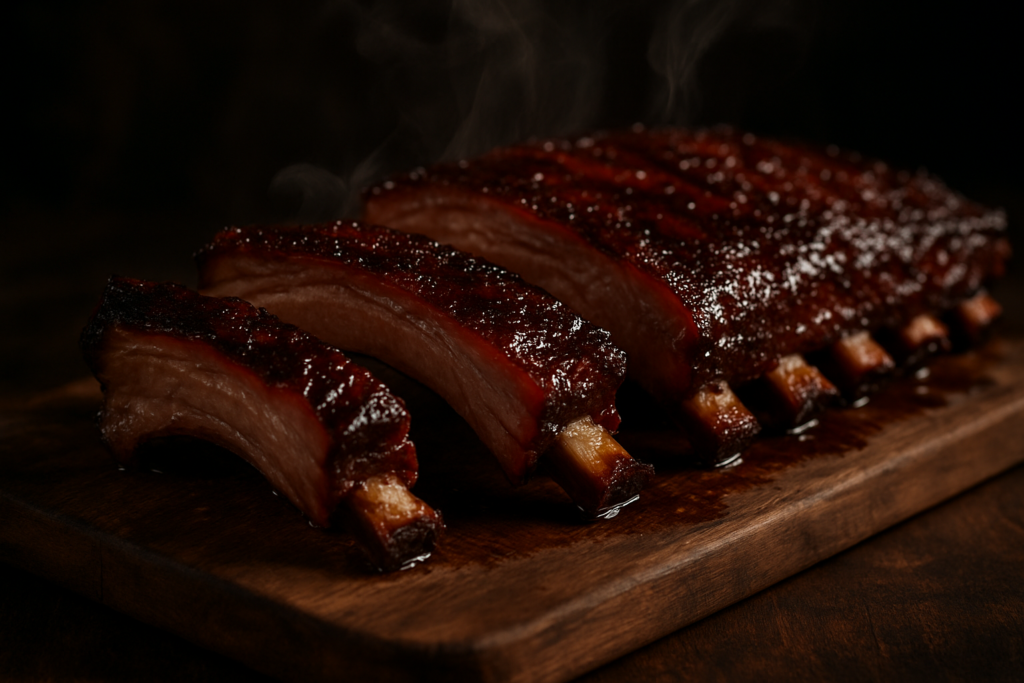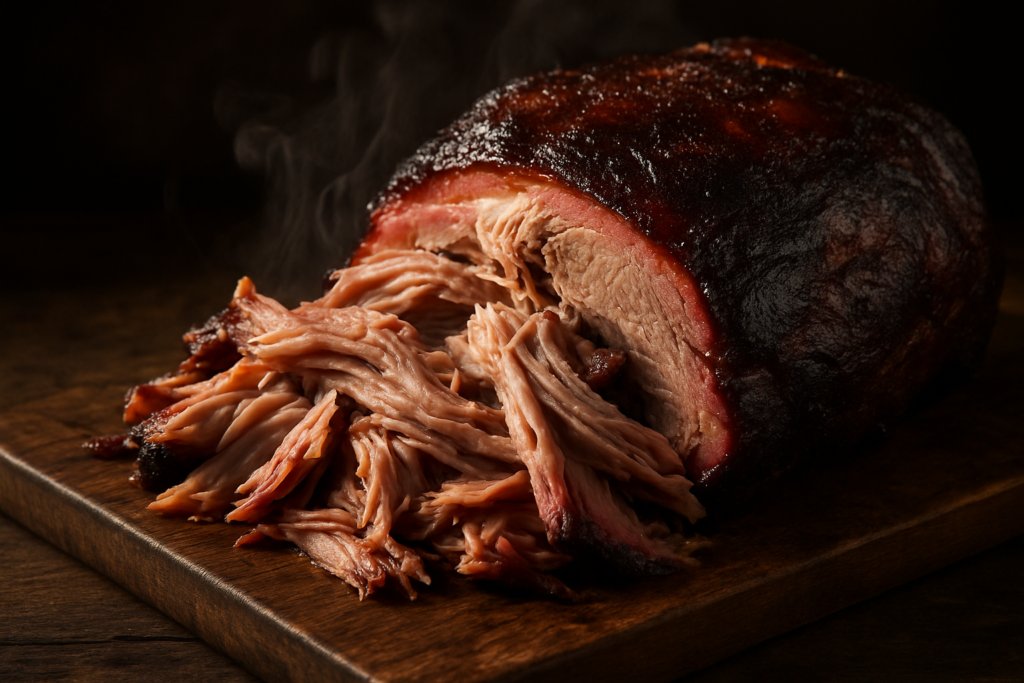
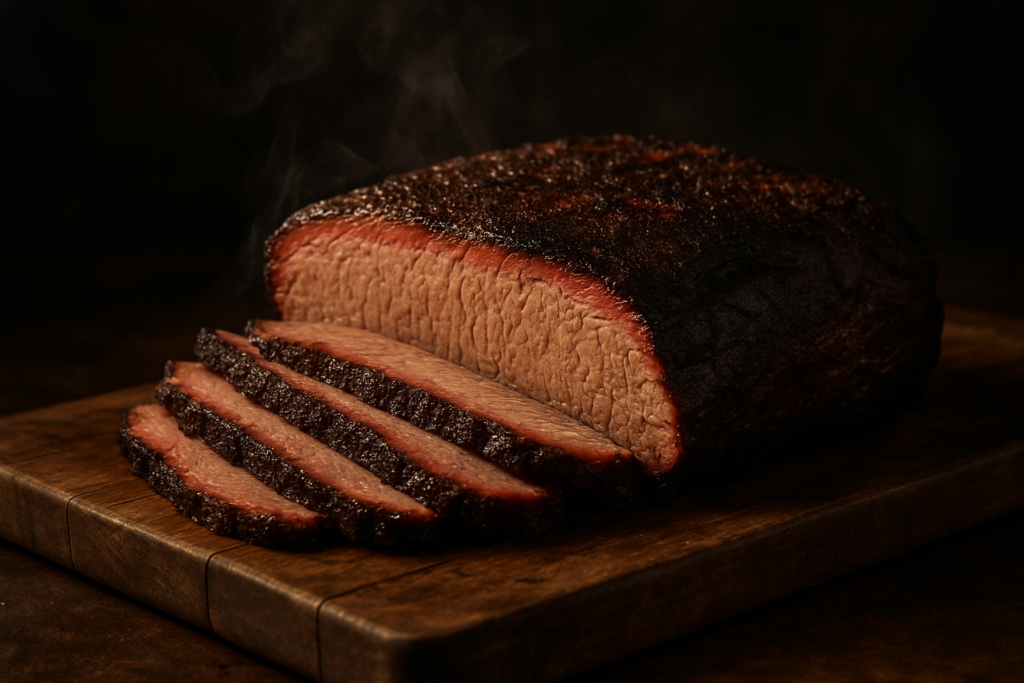
Making your first brisket might make you nervous. This guide makes it work anyway.
Brisket is the boss battle of backyard BBQ. Twelve to sixteen hours of babysitting a $60-120 piece of meat to a specific internal temperature, hoping the smoke was clean, the rub set right, and you did not stall too long. This step-by-step guide walks a first-timer through the entire cook – from picking the brisket at Costco to slicing it against the grain – with the temperature targets, timing, and safety checkpoints that keep it out of the trash can.
Disclosure: PitPrimer earns commission on qualifying purchases through Amazon Associates and select brand campaigns.
In this guide (jump ahead)
- The very short version
- Step 1: Buy the right brisket
- Step 2: Trim the brisket
- Step 3: Rub
- Step 4: Smoke to 165-170F internal
- Step 5: Wrap in butcher paper
- Step 6: Finish to 200-205F AND probe test
- Step 7: Rest (this is not optional)
- Step 8: Slice against the grain
- Common first-timer brisket mistakes
- What to serve with brisket
- Timing example: dinner at 6 pm on Saturday
- Related PitPrimer guides
- Editor’s ranking
- Related PitPrimer guides
Video: Easy Smoked Brisket Recipe by HowToBBQRight (Malcom Reed), via YouTube.
The very short version
- Buy a 12-14 lb whole packer brisket (Prime grade if the budget allows, Choice is fine).
- Trim it: 1/4-inch fat cap, remove hard fat between point and flat.
- Rub it: salt, pepper, garlic powder. That is all you need.
- Smoke at 225-250F until internal temp hits 165-170F (about 6-8 hours).
- Wrap in unwaxed butcher paper.
- Continue smoking until internal temp hits 200-205F AND probe slides in “like butter” (another 3-5 hours).
- Rest wrapped for a minimum of 1 hour, ideally 2-4 hours in a warm cooler.
- Slice against the grain, 1/4-inch thick.
Total time: 12-16 hours cook + 1-4 hours rest. Prep time: 20 minutes. Adult supervision: constant during the first two hours, occasional after that.
Step 1: Buy the right brisket
A “whole packer” brisket is the full cut – two muscles joined together, the flat and the point. Untrimmed it weighs 12-16 pounds. This is what you want. Do not buy a flat-only brisket for your first cook – it dries out faster and there is less margin for error.
See also: Traeger vs Recteq 2026: The Enthusiast Pellet Grill Head-to-Head (Which Ranks Higher?)
Where to buy:
- Costco – almost always has whole packers in Prime grade at competitive prices. This is where 80% of experienced pitmasters shop.
- Sam\’s Club – similar Costco-tier pricing, usually Choice grade.
- Local butcher or meat market – higher price but the option to request specific grade and specific trim.
- Snake River Farms or online mail-order – Wagyu or Prime+ options for special occasions. Overkill for a first cook.
Grade guidance for a first cook: Choice is fine, Prime is better. Wagyu is like taking driving lessons in a Ferrari – the marbling gives you extra margin, but it is expensive to learn on.
Step 2: Trim the brisket
Trimming is the most-intimidating step for first-timers and it should not be. The goal is simple: remove hard fat that will not render, leave a thin fat cap that will.
See also: How to Smoke Pork Shoulder for Pulled Pork: The Complete First-Timer Guide
Tools you need:
- A sharp boning or butcher knife (a chef\’s knife works too)
- A cutting board with a groove to catch juice
- Clean hands and paper towels
- Flexible boning knife (6-inch)
- As its name suggests, the Fibrox Pro Boning Knife is used to easily trim or remove meat and fish from the bone
- The curved, flexible stainless steel blade is ideal for thinner or more delicate cuts of meat such as chicken or fish that are…
- Patented Fibrox handle is textured, slip resistant, and ergonomically designed for balance and comfort, NSF approved
- John Boos maple cutting board
- Food preparation accessory helps you prepare ingredients efficiently, perfect for chopping meats, fruits, and veggies
- Offers ample space for chopping essential ingredients measuring 16 inches long, 10 inches wide, and 1 inch in thickness, ensuri…
- Crafted from hand-selected American hard maple wood with end grain design, this cutting board showcases quality in its construc…
- Nitrile gloves (food safe)
- Premium Food Nitrile Gloves: Designed for sensitive skin, these disposable gloves are latex-free, making them ideal for anyone…
- Food-Safe & Reliable: Heat- and cold-resistant, these non-toxic nitrile gloves won’t release harmful chemicals when contacting…
- Lightweight & Comfortable: With their great elasticity and sensitivity, these chef gloves are resistant to tearing and provide…


The four-cut trim (10 minutes):
- Flip the brisket fat-side down. Look at the meat side. You will see a thin membrane called silverskin. Cut it off.
- Flip it back over (fat-side up). Find the thickest part of the fat cap. Cut the fat cap down to about 1/4 inch. Do not go below – the fat cap protects the meat from drying out.
- Find the seam between the point (thicker end) and the flat (thinner end). There is hard fat in that seam – remove it.
- Trim any dangling floppy edges from the flat. Round off the corners. The goal is a smooth surface for the rub.
Save the trim. Beef fat trimmings render into tallow, which is worth a small side project on any smoker day. Everything else becomes ground beef.
Step 3: Rub
Texas-style brisket uses one seasoning: salt and pepper. That is genuinely all you need. If you want to add complexity, garlic powder is legit. Everything else – sugar, paprika, coffee, chili – is a matter of taste, not necessity.
See also: Best BBQ Spice Rack and Rub Storage 2026: Wall-Mount, Countertop, Drawer, and Airtight Storage
The one-size-fits-all rub recipe:
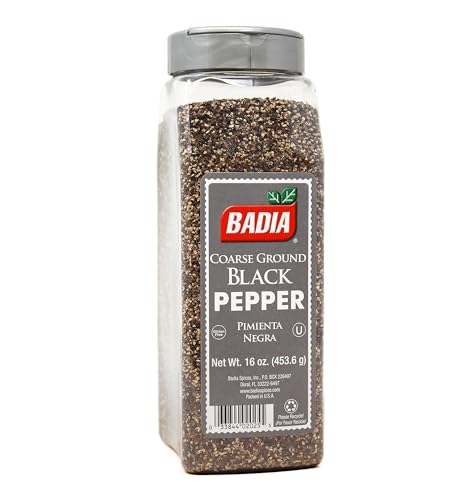
- Equal parts by volume: coarse black pepper + kosher salt
- Optional: half-part garlic powder
Apply generously. Every inch of the brisket surface should be covered. Do this 1-24 hours before smoking. Refrigerate uncovered on a wire rack (this is called “dry brining” – it draws out surface moisture so the smoke penetrates better).
- Coarse black pepper (16 oz)
- Robust Flavor: Coarse ground black pepper delivers a bold, aromatic heat that enhances the natural taste of meats, vegetables,…
- Coarse Grind Texture: Larger granules provide a satisfying bite and visual appeal, making it ideal for steak rubs, burgers, roa…
- Kitchen Versatility: A pantry essential for everyday cooking, grilling, smoking, and seasoning blends, offering dependable perf…
- Kosher salt (Diamond Crystal)
- No additives; Only pure kosher salt
- Diamond Crystal Kosher Salt is endorsed by the American Culinary Federation
- Pure and Natural with no GMOs
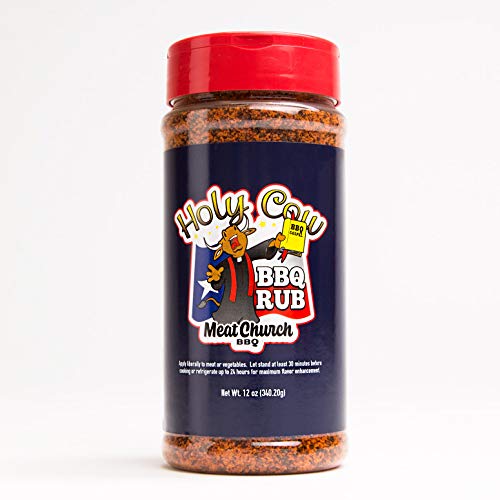
- Meat Church Holy Cow (all-in-one rub)
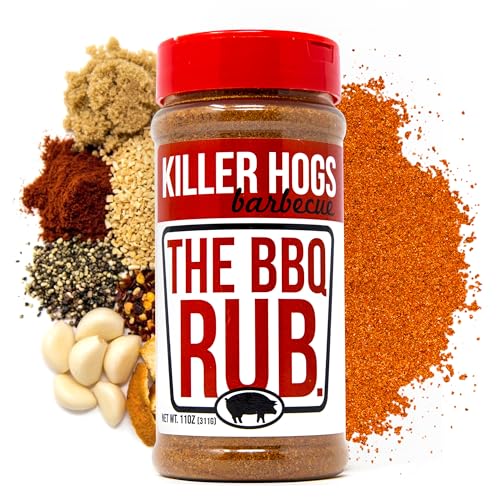
- Killer Hogs BBQ Rub
- CHAMPIONSHIP PITMASTER FLAVOR: Created by the Killer Hogs Championship BBQ team, this legendary Killer Hogs BBQ Rub delivers a…
- BALANCED SWEET HEAT FLAVOR: A blend of brown sugar, paprika, and spices delivers the classic sweet BBQ rub flavor pitmasters lo…
- MADE FOR BBQ: Crafted to bring out bold flavor and beautiful bark, this savory beef rub enhances steaks, hamburgers, and grille…

Step 4: Smoke to 165-170F internal
Set your smoker to 225F. Choose your wood: oak or pecan for classic Texas style, hickory for a more assertive smoke flavour, cherry for a hint of sweetness.
Place the brisket fat-side up. Some pitmasters argue for fat-side down; it depends on your smoker’s heat source. On a Traeger or Camp Chef Woodwind (heat from below), fat-side up so the rendering fat bastes the meat. On a stick burner with heat from the side, fat-side toward the heat source.
Place your leave-in wireless meat thermometer probe in the thickest part of the flat. Do not touch the fat or bone. Place a second probe (if you have one) in the thickest part of the point.
The pit thermometer alone will lie to you. Trust the meat probe. This is why we recommend a real wireless thermometer – see our Best Meat Thermometer 2026 guide.
Our thermometer pick: BBQOVN BBQ9 Smart Wireless Thermometer with 7 NIST-certified sensors, around $70.
Timing: 60-90 minutes per pound is a rough rule of thumb. A 12 lb brisket = 12-18 hours. Start early – a 6 pm dinner target means firing the smoker at 4-6 am.
The stall (this is normal, do not panic):
Around internal temp 155-165F, your brisket will stop climbing. It might sit at 160F for 2-4 hours. This is “the stall” – moisture evaporating off the surface cools the meat as fast as the smoker adds heat. It is normal, universal, and unavoidable at low temperatures.
Do not open the smoker. Do not bump the temp up. Wait it out. The stall breaks when you wrap.
Step 5: Wrap in butcher paper
Once the internal temp hits 165-170F AND the bark looks well-set (dark mahogany, not black), it is time to wrap.
Two options: pink unwaxed butcher paper (Texas-style) or heavy-duty aluminum foil (“the Texas crutch”).
- Butcher paper: bark stays crisper, moisture escapes gradually, more traditional. Best default choice.
- Aluminum foil: pushes past the stall fastest, produces the most tender result but softer bark. Better for beginners because it forgives more.
- Pink butcher paper (24″ roll)
- Enhance your smoking meat adventure with our 24-inch wide roll of butcher paper specially crafted to entrap the flavorful smoke…
- Experience the unique properties of our 24 wax paper, an exclusive feature of our peach butcher paper smoking meat. Its reinfor…
- Our butcher paper wide roll comes as an easy-to-use paper roll, ensuring peach butcher paper smoking meat is a straightforward…
- Heavy-duty aluminum foil (18″ commercial)
- BBQ
- Foil
- Sandwich Wrap


Wrap tightly. Two full wraps of butcher paper, seams down. Replace the meat probe if it fell out during wrapping. Return to the smoker.
Step 6: Finish to 200-205F AND probe test
Continue smoking at 225F. Watch the temp climb through the 170s and 180s. It will accelerate now that the surface is not evaporating heat.
Do not just cook to temperature. This is the single biggest first-timer mistake. Every brisket is done at a slightly different internal temperature – somewhere between 200F and 210F. What matters is the “probe test”:
Insert your instant-read thermometer into the thickest part of the flat. It should slide in with essentially zero resistance – “like a hot knife through warm butter.” If it feels rubbery or firm, the brisket is not done, regardless of temperature.
Start probe testing at 195F. Check every 15-20 minutes. When it slides in cleanly, the brisket is done.
Step 7: Rest (this is not optional)
Pulling a brisket at 205F and slicing immediately gives you tough, dry meat. The muscle fibers need time to relax and the internal juices need to redistribute.
Minimum rest: 1 hour. Ideal rest: 2-4 hours. Some pit teams rest for 8+ hours.
The cooler method (best for first-timers):
- Remove the brisket from the smoker.
- Leave it wrapped in butcher paper.
- Wrap the whole thing in an old towel.
- Place in an empty cooler.
- Close the lid and walk away for 2 hours minimum.
The cooler works because of thermal mass and the towel insulates. Brisket temperature drops from 205F to about 155F over 3-4 hours – which is the ideal serving temperature.
If you’re resting a brisket alongside ribs or sausage from the same cook, a divided BBQ resting blanket keeps them separated so flavors don’t bleed together in a shared cooler — a reasonable upgrade over the towel method for a multi-meat cook.
- Coleman 48 qt cooler (for rest)
- STAYS COLD UP TO 60 HOURS: Coleman TempLock foam insulation holds ice-cold temperatures for up to 2.5 days — set it up Thursday…
- ROOM FOR A LARGE GROUP: Fits 31 standard 12 oz cans with 24 lbs. of ice — or up to 76 cans without ice — enough to keep a full…
- FITS 2-LITER BOTTLES UPRIGHT: Tall interior keeps 2-liter bottles standing to help prevent spills, so soda, juice, mixers, and…
- YETI Tundra 45 (premium)
- The YETI Tundra 45 combines versatility with durability with a capacity of up to 26 cans with a recommended 2:1 ice-to-contents…
- Ice stays ice thanks to up to 3 inches of PermaFrost Insulation and an extra thick FatWall design is certified Bear-Resistant
- The Rotomolded Construction makes the Tundra armored to the core and virtually indestructible so wherever you decide to take it…


Step 8: Slice against the grain
The final make-or-break step. Brisket has two muscles (flat and point) with grains running in DIFFERENT directions. If you slice with the grain, you get tough chewy meat. Against the grain, you get tender meat that pulls apart with a fork.
How to identify the grain:
- Before you started cooking, the flat’s grain ran along the long axis of the brisket.
- The point\’s grain ran perpendicular to the flat.
- Now, look at the meat surface. Find the long muscle fibers. Slice perpendicular to them.
The slicing technique:
- Sharp long slicing knife (10-12 inch)
- Slice 1/4-inch thick for the flat
- Slice 3/8-inch or dice for the point (harder to eat as slices due to fat content)
- Start from the outside and work inward
- Brisket slicing knife (12″ granton)
- USED BY THE VIRAL BUTCHER WIZARD: The same knife trusted by the Viral Butcher Wizard for flawless briskets, roasts, and BBQ sli…
- PRECISE GRANTON EDGE: Reduces food sticking with air pockets, ensuring smooth, clean cuts for brisket, turkey, and more.
- LONG 12″ BLADE: Designed for fluid slicing motions, eliminating saw marks and delivering professional-quality results.
- Victorinox Fibrox 12″ slicer
- ESSENTIAL CARVING KNIFE. A versatile kitchen essential for slicing and carving meats. Crafted with a round tip and Granton Blad…
- SLICE WITH PRECISION. With a long, narrow shape and razor sharp edge, this knife can slice through meats in a single, smooth mo…
- EASY HANDLING. This knife features an ergonomic Fibrox Pro handle for a non-slip grip – even when wet. This exceptional knife i…


Common first-timer brisket mistakes
- Not planning enough time. A 12 lb brisket can take 16+ hours. Start earlier than you think.
- Opening the smoker to check. Every time you open, temperature drops 25-50F and adds 15+ minutes to the cook. Trust your wireless probes.
- Panicking during the stall. It is normal. Wait it out or wrap to push through.
- Slicing too early (skipping rest). Non-negotiable. Rest is not optional.
- Slicing with the grain. Even a perfectly cooked brisket becomes tough if sliced the wrong direction.
- Trusting temp alone (not probe testing). Every brisket finishes at a different temperature. The probe slide is what matters.
- Cooking too hot. Above 275F you overcook fast and lose the low-and-slow benefits. Stay at 225-250F.
What to serve with brisket
Traditional Texas-style plate:
- Sliced brisket (flat) plus chopped point
- White bread or fresh Texas toast
- Pickles and sliced raw white onion
- Coleslaw
- Baked beans or beans with brisket burnt ends
- Potato salad
Sauce is optional and controversial. Real Texas brisket does not need sauce. If you serve sauce, put it on the side, not on top.
Timing example: dinner at 6 pm on Saturday
| Time | Step |
|---|---|
| Friday 6 pm | Trim and rub the brisket. Refrigerate uncovered. |
| Saturday 3 am | Fire the smoker. Let it stabilize at 225F. |
| Saturday 4 am | Brisket on the smoker. |
| Saturday 10-11 am | Internal temp 165-170F. Wrap in butcher paper. |
| Saturday 1-3 pm | Internal temp 203F + probe test slides in. Pull. |
| Saturday 3-6 pm | Rest in cooler wrapped in towel. |
| Saturday 6 pm | Slice against the grain, serve. |
Related PitPrimer guides
Editor’s ranking
Your first brisket does not need to be perfect. Trim it, salt and pepper it, smoke it at 225F until 165F internal, wrap it, push to 203F AND probe test, rest it in a cooler for 2+ hours, slice against the grain.
The tools that make the difference: a reliable wireless meat thermometer, sharp knives, butcher paper, and a proper resting cooler. Even a $60 Costco Choice brisket becomes memorable BBQ with these fundamentals right.
The mistakes to avoid: not enough time, opening the smoker constantly, panicking during the stall, skipping the rest, slicing with the grain.
Every brisket teaches you something. Your first will not be your best. Your tenth might be. What matters is the plate at dinner: sliced brisket, white bread, pickles, and enough for seconds.
See you at the smoker. Happy brisketing.
About this guide
Our recommendations synthesize manufacturer specifications, published editorial reviews (AmazingRibs, Wirecutter, Serious Eats, Meathead), and community feedback from BBQ forums (r/smoking, r/BBQ, Smoking Meat Forums), cross-checked against real-world reports. We do not accept payment for recommendations. Where a product is covered by an active brand campaign, we disclose that in the post; otherwise all recommendations are independent of manufacturer relationships.
Last reviewed: July 2026
Related PitPrimer guides
- How to Smoke Ribs for First-Timers: Baby Back, Spare, and St. Louis Style Complete Guide
- How to Smoke Pork Shoulder for Pulled Pork: The Complete First-Timer Guide
- How to Smoke a Whole Turkey for Thanksgiving 2026: Complete Method + Gear Guide
- Best Kamado Joe Accessories 2026: DoJoe, Cast Iron, JoeTisserie, Cold Smoke, and Maintenance
Frequently asked questions
How were these products selected?
This guide is a research-based synthesis of product specs, brand reputation, current Amazon reviews, and category trends. It is not a hands-on review – use it to narrow options before you buy.
What price range should I expect?
Prices vary significantly across the categories above. Entry options start at the lower end of each tier listed, while premium picks can be several times more. Amazon pricing changes frequently, so confirm current numbers on the product listings.
Should I always buy the most expensive option?
Not necessarily. Premium products offer better materials, longer warranties, and higher-end features, but mid-tier picks meet the needs of most buyers. Match the pick to your actual use case rather than defaulting to the top of the price range.
How often is this guide updated?
This guide is refreshed as new products launch and older picks are discontinued. Amazon pricing and stock change daily – always confirm current price and availability on Amazon before purchase.
Where is the best place to buy?
Amazon is linked throughout this guide because it typically has broad selection, current pricing, and standardized return policies. Direct manufacturer sites and specialty retailers are also options depending on category and preference.
Shop the Amazon Storefront
Every pellet smoker, grill, and BBQ accessory recommendation – curated in one Amazon Storefront.
Try Amazon Prime free for 30 days – fast pellet and BBQ ingredient delivery
As an Amazon Associate and Amazon Influencer, we earn from qualifying purchases at no extra cost to you.